



Santiniketan is one of the most culturally significant and inspiring places in India. Located in the Birbhum district of West Bengal, it is a unique town known for its deep connection with education, art, literature, and nature. Santiniketan is closely associated with Rabindranath Tagore, India’s Nobel Prize–winning poet, philosopher, and educationist. In 2023, Santiniketan was recognised as a UNESCO World Heritage Site, acknowledging its exceptional contribution to global education, culture, and humanistic values.
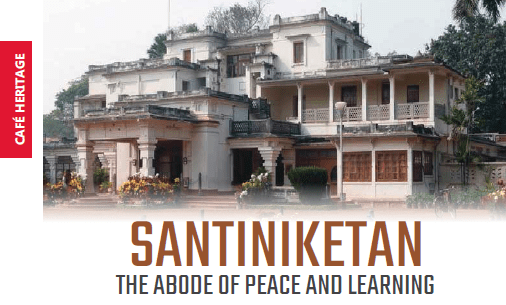
The word Santiniketan means “abode of peace”, and the place truly lives up to its name. Unlike crowded cities, Santiniketan offers an atmosphere of calmness, open spaces, red soil, and greenery. It is not just a tourist destination but a living centre of ideas, creativity, and learning, where tradition and modern thought come together in harmony.
The history of Santiniketan begins in the late 19th century. Rabindranath Tagore’s father, Maharshi Debendranath Tagore, established a spiritual retreat here in 1863. Inspired by this peaceful environment, Rabindranath Tagore founded a small school in 1901 with a revolutionary idea of education. He believed that true learning should happen in close contact with nature and should encourage freedom of thought rather than rote learning.
This school later grew into Visva-Bharati University in 1921. Tagore imagined Visva-Bharati as a “world university” — a place where knowledge from India and the rest of the world could meet. His famous idea was, “Where the world makes a home in a single nest.” Students from many countries came to Santiniketan, making it a truly international centre of learning.
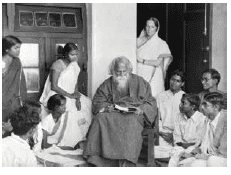
Santiniketan is very different from conventional educational institutions. Classes were held under trees, not inside closed classrooms. Students were encouraged to observe nature, read literature, practise music and art, and develop a broad understanding of life. This approach was far ahead of its time and stood in contrast to the rigid colonial education system that existed in India during that period.
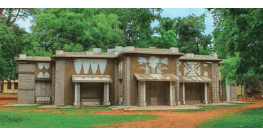
One of the main reasons Santiniketan received UNESCO World Heritage status is its unique educational philosophy and cultural landscape. The site includes important areas such as the Santiniketan Ashram, Uttarayan Complex (Tagore’s residence), Kala Bhavana (centre for fine arts), and Cheena Bhavana, which promoted the study of Asian cultures. The buildings are simple but meaningful, blending local materials with artistic ideas from different parts of the world.
Santiniketan also played a major role in the development of modern Indian art. Artists like Nandalal Bose, Ramkinkar Baij, and Benode Behari Mukherjee created artworks that reflected Indian life, rural culture, and human emotions. Ramkinkar Baij’s famous sculpture “Santhal Family” is considered a landmark in modern Indian sculpture and represents the tribal communities of the region.
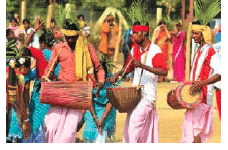
Culture is at the heart of everyday life in Santiniketan. The place is known for its festivals, which are closely connected to seasons and nature. Basanta Utsab, the spring festival, is celebrated with music, dance, and colours inspired by Tagore’s vision of joy and renewal. Poush Mela, held in winter, is a vibrant fair showcasing folk music, handicrafts, and local traditions. These festivals attract visitors from across India and the world.
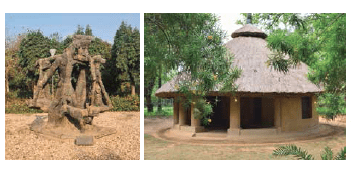
Santiniketan is not only about the past; it is a living heritage. Even today, students, teachers, artists, and locals continue to follow Tagore’s ideals. The red-earth paths, open fields, murals, and performances keep the spirit of creativity alive. The town also supports local artisans and tribal communities, making culture a part of everyday livelihood.
Visiting Santiniketan is a peaceful and enriching experience. Unlike typical tourist places, there are no loud attractions or commercial crowds. Walking through the ashram area, reading Tagore’s writings, listening to Rabindra Sangeet, and watching students practise dance or painting gives visitors a deep sense of calm and reflection. The nearby Khoai region, with its unique red soil and natural formations, adds to the natural beauty of the area.
The best time to visit Santiniketan is between November and February, when the weather is pleasant and festivals like Poush Mela take place. The town is well connected to Kolkata by road and rail, making it easily accessible. Visitors are encouraged to respect the quiet and cultural nature of the place.
Santiniketan is more than a historical site; it is a philosophy in practice. It teaches us the value of harmony between humans and nature, the importance of cultural exchange, and the power of education to shape a better world. At a time when education is often reduced to competition and exams, Santiniketan reminds us that learning should also nurture creativity, empathy, and peace.
For India and the world, Santiniketan is a priceless heritage. Its recognition as a UNESCO World Heritage Site is not just an honour for its buildings or history, but for the timeless ideas it represents. Santiniketan stands as a symbol of hope — that education, culture, and humanity can come together to create a more understanding and peaceful world.