



S N Poojitha
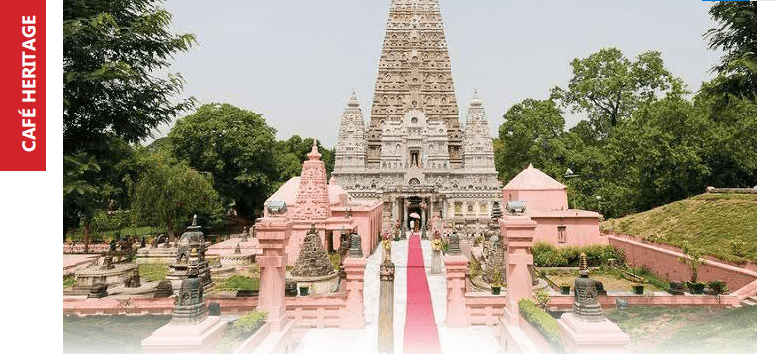
In the bustling town of Bodh Gaya in Bihar stands a temple that has changed the spiritual and philosophical history of the world. The Mahabodhi Temple is not just a structure of bricks and stones. It is a symbol of awakening, peace and inner transformation. It marks the sacred spot where Prince Siddhartha Gautama sat under a tree and emerged as the Buddha after attaining enlightenment. For millions of people across the world, this site is the heart of Buddhist faith and one of the most peaceful places on Earth.
The story of this sacred place begins more than 2,500 years ago. Siddhartha Gautama, a young prince and son of Suddhodhana and Maya was troubled by the suffering he saw around him. He renounced his wife Yashodhara and son Rahula, quit his luxurious life and began his search for truth. After years of meditation, experimentation and self-discipline, he reached the banks of the Falgu River and sat beneath a peepal tree. He vowed not to rise until he found the answers he was seeking. Through a long night of deep meditation, he overcame fear, doubt, and desire. As the next day began, he attained enlightenment and became the Buddha — “the Awakened One”. The tree under which he sat came to be known as the Bodhi Tree and the place became one of the most sacred pilgrimage centers in the world.
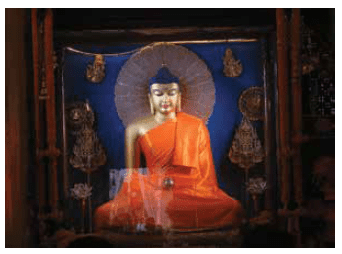
The present Mahabodhi Temple was originally built by Emperor Ashoka in the 3rd century BCE. Ashoka, who embraced Buddhism after witnessing the horrors his war with Kalingas. He recognized the importance of this site and built the shrine to mark it. Over the centuries, the temple faced periods of neglect, invasions, and natural decay. It was rediscovered and restored in the 19th century, reviving its importance on the world stage. In 2002, UNESCO declared the Mahabodhi Temple Complex a World Heritage Site, recognizing its universal spiritual and historical significance.
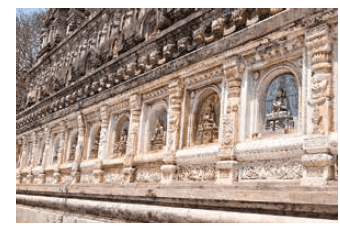
Architecturally, the temple is a rare and a beautiful example of early brick structures in India. The central tower rises to a height of about 55 meters and is crowned with a golden spire. The tower is decorated with carvings of Buddha in different postures, delicate motifs of lotus flowers, and geometric patterns. Four smaller towers stand at the corners, giving the structure balance and symmetry. Unlike many Hindu temples, the Mahabodhi Temple does not overwhelm with grandeur. Instead, it invites silence, reflection, and stillness.
At the heart of the complex stands the sacred Bodhi Tree. The current tree is believed to be a direct descendant of the original tree under which Buddha attained enlightenment. Pilgrims from across the world sit beneath its spreading branches in meditation, prayer, and quiet gratitude. Nearby is the Vajrasana, or Diamond Throne, a stone slab that marks the exact spot where Buddha is believed to have sat. There is also the sacred pond, known as the Lotus Pond, where scriptures say the Buddha walked in meditation during the weeks following his enlightenment.
There are many lesser-known and fascinating aspects of the Mahabodhi Temple that make it even more special. Ancient records suggest that a sapling of the original Bodhi Tree was taken to Sri Lanka by Sanghamitta, the daughter of Emperor Ashoka, and planted at Anuradhapura. That tree continues to thrive even today, making it one of the oldest documented trees in the world. Another interesting detail is that the temple was built almost entirely of bricks at a time when most Indian monuments were carved in stone, showcasing the advanced craftsmanship of ancient Indian builders.
The spiritual significance of Mahabodhi goes beyond religion. It represents the idea that peace begins from within. It teaches that suffering is part of life, but liberation is possible through understanding, compassion, and mindfulness. People of all faiths visit the temple not only to pray but also to experience a sense of calm that is difficult to find in modern, fast-paced life. Buddhism after Buddha’s times has got divided into three schools. Hinayana or the inferior was following the more conservative and orthodox systems and popular in Sri Lanka, Myanmar, Thailand, Cambodia and Laos. Mahayana – a more liberal form based on translated texts into Tibetan language and followed in Nepal, China, Mongolia, Japan and Korea. Finally, Vajrayana or the tantric forms followed by a small group nowadays. But across schools of thought, Buddhist philosophy can be summarized as – Life has both happiness and suffering, and suffering is a natural part of life; Desire and attachment are the main causes of pain and dissatisfaction; Peace comes from letting go of greed, anger, and ignorance and Kindness and compassion towards all living beings are the heart of Buddhism.
For travelers, a visit to Mahabodhi Temple is not complete without exploring the surroundings of Bodh Gaya. Nearby lies Dungeshwari Cave Temples, where Buddha is believed to have practiced extreme asceticism before choosing the middle path. The Great Buddha Statue, a towering figure of meditation, offers a powerful visual symbol of serenity. The Thai Monastery, Japanese Temple, Tibetan Monastery, and Bhutanese Monastery reflect how Buddhism spread across Asia and how different cultures honor the same teachings in unique ways.
A visit to Bodh Gaya is not just about sightseeing. It is about slowing down. It is about reconnecting with silence. The temple encourages visitors to walk softly, speak gently, and look inward. There is an unspoken calm that surrounds the complex, especially in the early mornings when prayer flags flutter in the breeze and the first rays of sunlight fall upon the spire.
In today’s world, filled with noise, conflict and constant urgency, the Mahabodhi Temple stands as a quiet reminder that transformation begins within. It does not preach in loud voices. It does not demand attention. It simply offers a space where the mind can rest and the soul can breathe.
More than a monument, Mahabodhi is a living symbol of awakening. It is the place where one man changed the course of human thought by choosing peace over power and wisdom over wealth. For India, it is one of the country’s greatest spiritual gifts to the world. For humanity, it is a timeless message that true happiness comes not from outside, but from within.
*****