



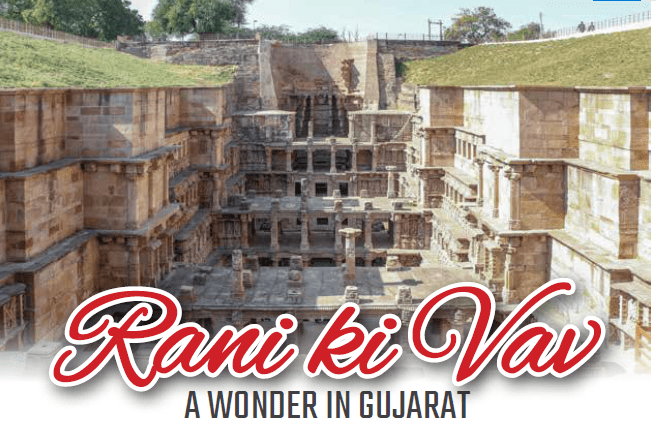
The Rani ki Vav in Gujarat is one of the finest examples of how architecture in India intricately combined utility with art and spirituality. Located in the historic town of Patan, this stepwell was built in the 11th century during the rule of the Solanki dynasty. It is believed to have been commissioned by Queen Udayamati in memory of her husband, King Bhima I. What may appear at first as a simple water structure slowly reveals itself to be a carefully planned and richly decorated monument that reflects the cultural depth of its time.
Stepwells were an important part of life in western India, especially in regions like Gujarat and Rajasthan where water was scarce for much of the year. These structures were designed not only to store water but also to make it easily accessible throughout changing seasons. Rani ki Vav goes far beyond this functional purpose. It transforms a basic need into an architectural experience. Instead of building upwards like most monuments, it is designed to go down into the earth. As one walks along the long corridor and gradually descends through its levels, the structure unfolds step by step.
The stepwell is built in the Maru-Gurjara style of architecture which is known for its detailed ornamental work and symmetry. It extends for more than 60 metres and consists of a series of stepped passages, pillared pavilions, and platforms that lead down to the well at the far end. There are seven levels in total, each supported by intricately carved columns. The layout is linear, guiding visitors slowly from the entrance towards the water source. As one goes deeper, the temperature becomes cooler and the surroundings quieter, creating a sense of calm.
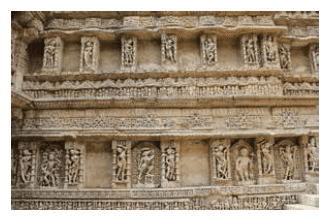
What makes Rani ki Vav truly remarkable is the sheer number and quality of its carvings. The walls, pillars, and niches are filled with sculptures that cover religious themes, daily life, and decorative motifs. It is estimated that there are over 1,500 major sculptures along with many smaller ones. These carvings are not repetitive or random. Each panel has been carefully designed and placed, showing a high level of planning and artistic skill.
Many of the sculptures are dedicated to Vishnu in different forms. The ten avatars of Vishnu, i.e, Dashavatara, are depicted across various sections of the stepwell. These include well-known forms like Rama and Krishna, as well as earlier incarnations such as Matsya and Varaha. The presence of Vishnu is significant because he represents preservation and balance in the universe. In the context of a water structure, this symbolism becomes even more meaningful, as water itself is a life-preserving element.
Apart from the main deities, there are many figures of apsaras, or celestial maidens, carved with great detail. These figures are shown in everyday activities such as adjusting jewellery, looking into mirrors, or dancing. The carvings capture movement and expression in a way that feels natural. They also reflect the aesthetic values of the time, where beauty and grace were important aspects of artistic representation. There are also depictions of sages, attendants, and scenes that hint at daily life, giving the structure a more human angle.
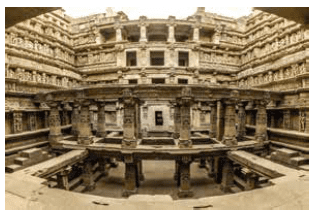
The carvings are notable for their precision. Even small details like ornaments, hairstyles, and fabric folds have been carefully worked out. Despite being made of stone, the figures appear crisp and expressive. This level of craftsmanship suggests that skilled artisans worked on the site over several years, possibly decades. The consistency in style across the structure also indicates careful supervision and planning.
Rani ki Vav is not only about decoration. The entire structure carries symbolic meaning. The act of descending into the stepwell can be understood as a movement from the outer world towards an inner, quieter space. In many Indian traditions, water is associated with purity and spiritual cleansing. As one walks down the steps towards the water, it can be seen as a journey towards clarity and reflection. The repeated presence of divine figures reinforces this idea, turning the stepwell into a place that connects daily life with spiritual thought.
For many centuries, the stepwell was not visible in its present form. It was buried under layers of silt, mainly due to flooding from the nearby Saraswati River. This covering, however, helped preserve the carvings from weathering and damage. The structure was later excavated and restored by the Archaeological Survey of India in the 20th century. Because of this, much of what we see today remains close to its original condition.
In 2014, Rani ki Vav was recognised as a UNESCO World Heritage Site. This recognition was given because the stepwell represents an exceptional example of water management combined with artistic expression. It shows how ancient builders understood both the practical and cultural importance of water. At the same time, it demonstrates the high level of craftsmanship that existed in India during that period. Unlike many other stepwells, which are more functional in design, Rani ki Vav stands out for the scale and quality of its sculptural work.
Visiting the stepwell today is a calming experience. The descent allows visitors to observe the carvings at close range. The structure is open to the sky, so the play of sunlight changes the way the carvings appear at different times of the day. Early mornings and late afternoons are particularly good for viewing, as the light falls at an angle that highlights the details. Even with visitors around, the depth and layout create a sense of quietness.
A visit to Patan also offers an opportunity to experience local food. Gujarati cuisine is known for its balanced flavours, often combining sweet, salty, and tangy tastes in the same meal. Simple snacks like Dhokla and Khandvi are widely available and easy to try. A full Gujarati Thali provides a more complete experience with a variety of dishes served together, including vegetables, lentils, breads, rice and sweets. Another popular local combination is Fafda and Jalebi which pairs a savoury snack with a sweet dessert.
Patan is also known for its traditional textiles, especially the Patan Patola. These silk sarees are made using a complex double ikat technique, where both sets of threads are dyed before weaving. The process is time-consuming and requires a high level of skill. As a result, Patola sarees are valued not just as clothing but as examples of fine craftsmanship. Visitors interested in textiles often find it worthwhile to explore this aspect of the town.
Rani ki Vav remains one of the most complete and well-preserved stepwells in India. It shows how a structure meant for everyday use can also serve as a space for art and reflection. The carvings, the layout, and the symbolism all come together in a balanced way. It does not rely on size or height to make an impression. Instead, its strength lies in detail, planning, and the quiet experience it offers to those who walk through it.
*****