





Amid the tranquil hills and lush green forests of Telangana stands one of India’s finest architectural wonders: the Ramappa Temple, also known as the Rudreshwara Temple. It is located near Palampet village in the Mulugu district, about 200 kilometers from Hyderabad. This 13th-century shrine is a symbol of the creative brilliance of the Kakatiya dynasty. In 2021, it was inscribed as a UNESCO World Heritage Site, making it Telangana’s first and India’s 39th World Heritage inscription. Unlike most temples, which are named after their deity or patron, this temple is named after its chief sculptor, Ramappa, whose craftsmanship was so exceptional that his name became immortal. More than just a temple, Ramappa is a poetic blend of devotion, art, and engineering: a monument that has survived wars, invasions, and earthquakes to continue inspiring awe centuries later.
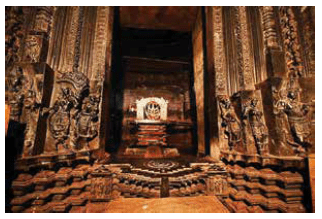
The temple was built in 1213 CE during the reign of King Ganapati Deva, one of the greatest rulers of the Kakatiya dynasty. It was commissioned by a general named Recharla Rudra, who dedicated it to Lord Shiva. Standing on a six-foot-high star-shaped platform, the temple’s structure is a marvel of design and proportion. The sanctum houses a grand Shivalinga, while the hall and porch are supported by intricately carved pillars that seem to dance with light and shadow. Every inch of stone is adorned with carvings — celestial dancers, musicians, warriors, and mythological scenes that capture movement with lifelike grace. The Kakatiya sculptors mastered the art of giving stone a sense of fluidity, and nowhere is that more visible than here.
One of the most fascinating features of the Ramappa Temple lies not in its carvings, but in its construction technique. The builders used something popularly known as “floating bricks”, made from a unique combination of lightweight clay and natural materials, which made the structure earthquake-resistant. The temple’s foundation, built with the sandbox technique, absorbs shocks during tremors . It is a brilliant example of early Indian engineering. As a matter of fact this temple survived a major earthquake in the 17th century with only partial damage, a testament to the scientific precision of its makers.
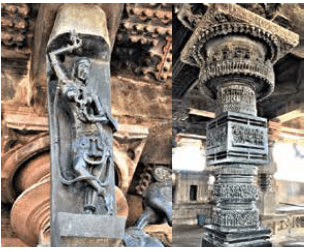
The roof and ceilings of the temple are supported by richly carved pillars, each telling its own story. The figures of Madanikas, or celestial dancers, are among its most famous features. These sculptures, captured in elegant poses, are masterpieces of balance and beauty. Their expressions, ornaments, and postures reflect the depth of Kakatiya artistry. The temple also depicts scenes from epics like the Ramayana and Mahabharata, blending mythology and everyday life with extraordinary skill.
The Ramappa Temple was built using locally available materials such as black basalt for the pillars and red sandstone for the walls, creating a striking color contrast that glows under sunlight. Around the main temple are smaller shrines and mandapas that once formed part of a larger temple complex. Though time has taken its toll, what remains is still majestic — a glimpse into the sophistication of medieval Deccan art.
UNESCO recognized Ramappa Temple for its “outstanding universal value,” praising its artistic and technical excellence. It represents a high point of Kakatiya architecture, which combined strong structural innovation with intricate aesthetics. The temple is not just an isolated monument but part of the larger story of the Kakatiyas, a dynasty that ruled much of present-day Telangana and Andhra Pradesh from their capital at Warangal. Their legacy also includes the Thousand Pillar Temple and the Warangal Fort, both remarkable for their sculpture and planning.
Over the centuries, the Ramappa Temple faced neglect and partial destruction during wars and invasions. Yet it has stood firm, weathering both human and natural challenges. Its recognition by UNESCO has brought renewed attention, leading to restoration efforts and better connectivity for visitors. Today, travellers come not only for spiritual reasons but also to marvel at the skill of ancient Indian builders who achieved such precision with basic pre modern tools.
For visitors, a trip to the Ramappa Temple offers much more than a glimpse of history. The temple is located near the Ramappa Lake, a vast and beautiful reservoir also built during the Kakatiya period. The lake’s calm waters, framed by forested hills, make it a perfect spot for reflection after exploring the temple. The nearby Laknavaram Lake, with its suspension bridge and small islands, is another scenic attraction. The historic city of Warangal, about 70 kilometers away, holds other Kakatiya treasures, including the grand Kakatiya Kala Thoranam, the arch that is now the emblem of Telangana state. Together, these sites create a living museum of the Kakatiya legacy.
A lesser-known fact about the temple is that it still functions as a place of worship. On special occasions like Maha Shivaratri, the temple comes alive with rituals, music, and lamps that light up its ancient walls. For locals, Ramappa is not just a heritage monument but a living connection to faith and history.
Visiting the Ramappa Temple is a journey into a time when art, science, and spirituality were deeply intertwined. Its builders were not just architects but thinkers who understood both beauty and balance. Every carving here speaks of devotion; every brick speaks of intelligence. Standing under its soaring spire, one cannot help but wonder at the vision of those who made it possible — craftsmen who turned stone into poetry.
For India, the Ramappa Temple is a reminder that true heritage lies in harmony, i.e, between creativity and craftsmanship, between human effort and divine inspiration. It is not just the pride of Telangana but a jewel in the crown of India’s cultural history. For travellers, it offers and experience of peace and wonder bridging the ancient and the eternal.
****