




Navi Mumbai
It is a very common thing in banks that we used to see an elderly gentleman walking up to the SB counter with a passbook in his hand. The cover was worn out, and its pages carried years of transaction entries. He requested the staff member to update it.
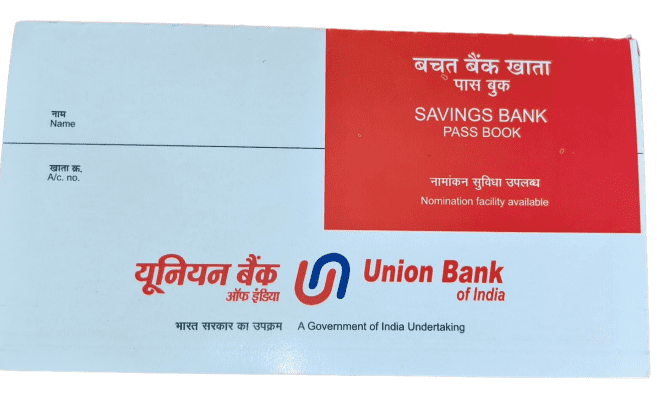
While waiting, his phone rang. He pulled out a smartphone, checked a message, and even made a UPI payment to someone. The contrast was striking. Here was a customer comfortably using digital payments, yet he still wanted his passbook updated.
That small incident raised an interesting question. In an age of mobile banking, internet banking, UPI, and instant alerts, why does the humble bank passbook continue to survive?
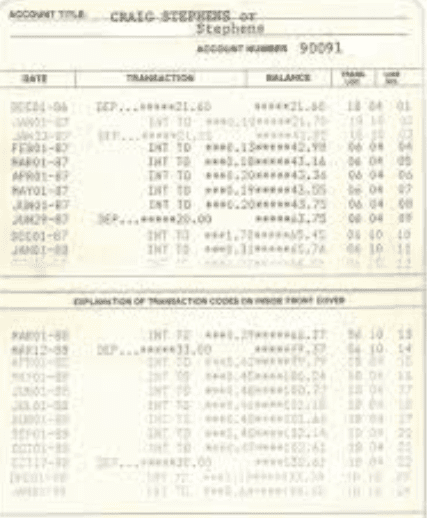
For younger customers, the answer may seem obvious. Why carry a booklet when every transaction is available on a mobile app? Why stand in a queue when a statement can be downloaded in seconds?
From a purely technological perspective, the passbook appears outdated. Yet banking is not only about technology. It is also about trust.
For millions of customers, a passbook is more than a record of transactions. It is tangible proof that their money is where it should be. The physical nature of the document provides a sense of certainty that many people still value.
A mobile app displays numbers on a screen. A passbook displays the same numbers on paper. The information may be identical, but the confidence they inspire can be very different.
Digital banking has undoubtedly transformed the customer experience. Account balances can be checked instantly. Funds can be transferred within seconds. Bills can be paid without visiting a branch. Banking today is faster and more convenient than ever before.
However, convenience does not automatically replace trust. Many senior citizens and long-time bank customers grew up in an era where financial records were maintained physically. They are accustomed to seeing entries printed, stamped, and preserved.
For them, a passbook is not merely a document; it is a trusted companion that has been part of their financial journey for decades.
This is not resistance to technology. In many cases, the same customers actively use smartphones and digital payments. They simply prefer having a physical record alongside their digital transactions.
India’s digital revolution has been remarkable. UPI has changed the way people transact, and smartphones have reached even remote parts of the country. Yet digital adoption does not mean everyone interacts with technology in the same way.
Many customers can comfortably receive money through their phones and make digital payments, but they may not be familiar with downloading account statements, navigating banking applications, or managing passwords. For such customers, a passbook remains simple, familiar, and easy to understand.
The passbook also plays an important role in various administrative and government-related processes. Copies of passbooks are often submitted as proof of account details for pensions, subsidies, scholarships, and other benefit schemes. In such situations, the passbook continues to serve a practical purpose.
A bank employee once shared an experience that perfectly captures the passbook’s enduring appeal. A farmer visited the branch after receiving a government benefit payment. He had already received an SMS confirming that the money had been credited to his account. Nevertheless, he wanted his passbook updated.
The farmer smiled and replied, “The SMS tells me the money came. The passbook tells me it is really there.”
His response may sound simple, but it reflects an important reality. Financial confidence is built differently for different people. While some customers trust digital notifications, others place greater faith in a printed record issued directly by the bank.
Technology has made banking easier, but it is not immune to disruptions. Phones can be lost, applications can malfunction, passwords can be forgotten, and internet connectivity can fail. In such situations, having a physical record can provide reassurance.
This does not mean passbooks are superior to digital banking. Rather, they serve a complementary role. Just as many people keep both digital and physical copies of important documents, some customers prefer maintaining both electronic and printed records of their financial transactions.
The passbook acts as a backup, offering comfort and continuity when technology becomes temporarily unavailable.
The number of passbook users is likely to decline over time. Younger generations increasingly rely on mobile banking applications and electronic statements. Many customers may never feel the need to visit a branch solely for a passbook update.
However, predicting the complete disappearance of passbooks may be premature. Banking history shows that older systems often continue to coexist with newer ones. Cash remains in circulation despite digital payments. Cheques are still used despite electronic transfers. Physical documents continue to exist despite cloud storage.
The passbook may follow a similar path. Its role may shrink, but it is unlikely to vanish overnight.
The survival of the bank passbook is not really a story about paper versus technology. It is a story about trust.
While digital banking has transformed the way we transact, many customers still value the reassurance of a physical record. The passbook may no longer be the face of modern banking, but it continues to serve a purpose.
In an age of UPI and mobile apps, that small booklet remains a reminder that progress in banking is not just about innovation—it is also about meeting customers where they are.
After all, not every old companion is ready for retirement.
Still, it is considered that the withdrawal slip should accompany the passbook.
By C.K. SUBRAMANIAM
Navi Mumbai