


Justice Shrihari P. Davare: An Enduring Commitment to Justice and Institutional Integrity

“Justice is not merely the interpretation of law, it is the unwavering commitment to fairness, accountability, and the protection of public trust.”

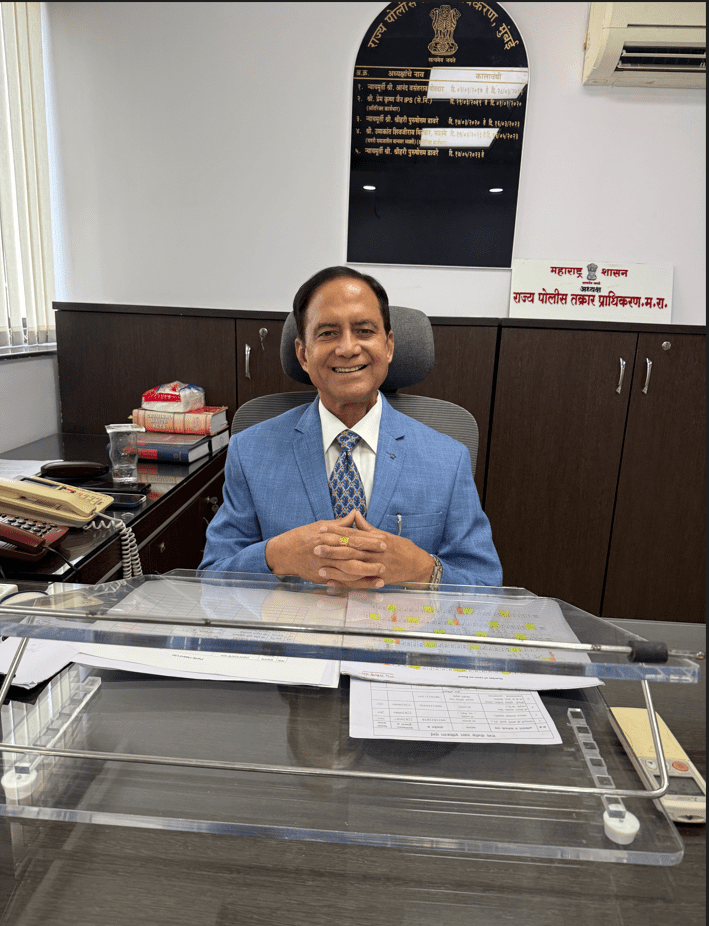
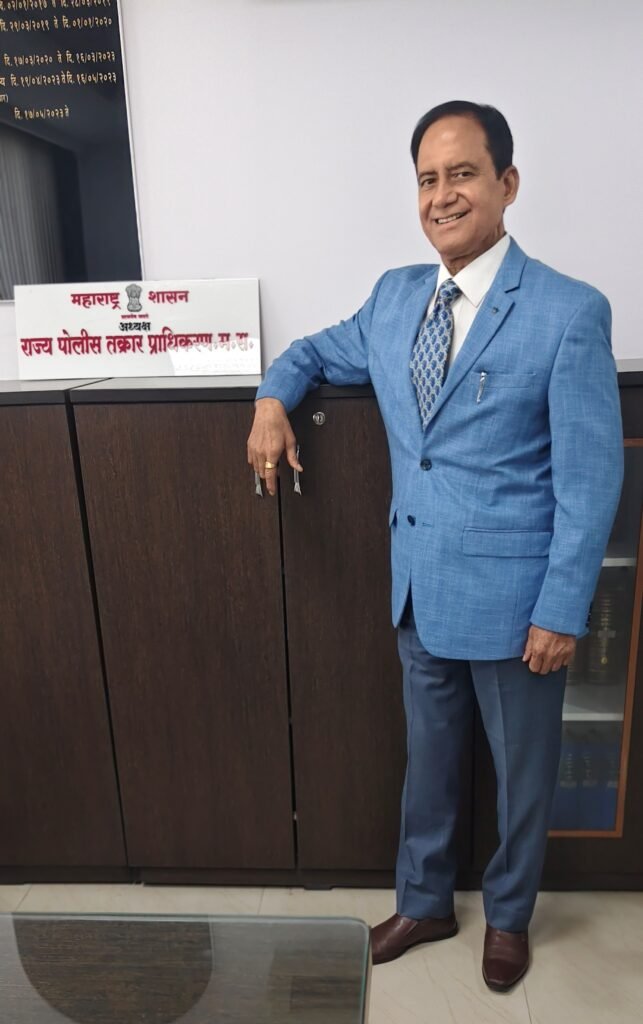
Justice Shrihari Purushottam Davare (Retd.) stands as a distinguished figure in India’s judicial landscape, an individual whose career reflects intellectual depth, institutional commitment, and an unwavering moral compass. Currently serving as the Chairperson of the State Police Complaints Authority, Maharashtra (SPCA), Mumbai, in his second term, he continues to play a vital role in reinforcing accountability within the system.
The SPCA, constituted pursuant to the Supreme Court’s directives on police reforms, functions as an independent oversight body addressing complaints of police misconduct pertaining to offences committed by police personnel regarding:
- Custodial assault
- Custodial death
- Rape / attempt to rape
- Corruption
- Land / House Grabbing
- Grievous hurt
- Extortion
- Any other act involving misuse of power & misuse of lawful authority
Its mandate is central to preserving transparency and strengthening public confidence in law enforcement. Under Justice Davare’s leadership, the Authority reflects the very principles it was designed to protect—fairness, impartiality, and institutional integrity.
Foundations of Excellence: Early Life and Legal Formation
Born on 6th April 1951, Justice Davare was raised in an environment deeply anchored in public service and legal tradition. His father, Late Shri Purushottam V. Davare, was a renowned advocate and former President of the Pune Bar Association, whose professional values left a lasting influence. His family’s distinguished background across defence and academia further reinforced a strong ethos of discipline and responsibility.

His education across Pune’s leading institutions—NMV Primary and High School, Fergusson College, S.P. College, and ILS Law College—laid the groundwork for a career defined by clarity of thought and principled action.
He commenced his legal practice in 1977 at the District and Sessions Court, Pune, where he spent over fourteen years building experience across civil, revenue, cooperative, and banking laws. This formative phase shaped his grounded understanding of the law, which later became a defining feature of his judicial approach.
A Judicial Career Defined by Depth and Responsibility
In 1993, Justice Davare was appointed as Judge of the City Civil Court and Additional Sessions Court, Greater Bombay. Over the years, he presided over a wide range of matters, including several high-profile and sensitive cases that demanded both legal precision and judicial restraint.
He handled significant trials such as the Pramod Mahajan murder case, along with matters involving Iqbal Mirchi, Anil Parab, and Arun Gawali.
His tenure as a Designated Judge under the TADA (P) Act, as well as his roles under the Prevention of Money Laundering Act (PMLA), NDPS Act, and the Immoral Traffic (Prevention) Act, placed him at the forefront of complex criminal adjudication.
His approach consistently reflected balance—firm adherence to the law coupled with a measured and disciplined judicial temperament.
In 2009, he was elevated as a Judge of the Bombay High Court, where he served until his retirement in April 2013, further strengthening his reputation as a jurist of credibility and depth.
Justice Davare’s contribution did not conclude with his retirement from the High Court. He continued to serve in key institutional roles, including as Vice-Chairman of the Maharashtra Administrative Tribunal (2014–2016) and as Presiding Officer of the Mumbai University and College Tribunal (2016–2019).
His expertise remains widely acknowledged, as reflected in his appointments as External Independent Judicial Member on various Settlement Advisory Committees of Union Bank of India and Bank of Maharashtra, as well as on the ARC Sale Committee. These roles underscore the continued reliance on his judicial insight in complex regulatory and financial matters.
Honours, Distinctions, and Lasting Institutional Contribution
Among his recognitions, the “NMV Bhushan-2019” award carries particular significance, symbolising acknowledgment from the very institution that shaped his early years.
His professional journey also includes notable contributions such as serving as Registrar for Alternate Dispute Resolution (ADR) at the High Court, Mumbai, and leadership roles within the Pune Bar Association and District Law Library.
Exclusive Interview with Justice Shrihari P. Davare
Question:
You have served across multiple judicial forums, from trial courts to the High Court and now in an oversight authority. What has remained constant in your understanding of justice?
Justice Davare:
“At every stage, justice must remain fair, impartial, and grounded in truth. While roles evolve, the core responsibility does not. It is essential to remember that each matter represents real lives and real consequences, and that awareness must guide every decision.”
Question:
As Chairperson of the State Police Complaints Authority, how do you view the importance of accountability in policing?
Justice Davare:
“Accountability is fundamental to any authority exercising power. Mechanisms such as the SPCA are essential to ensure that this power is exercised responsibly and that public confidence in the system is maintained.”
Question:
Even after your tenure at the High Court, you have continued to serve in various capacities. What drives this continued engagement?
Justice Davare:
“If one has the experience and the opportunity to contribute, there is a responsibility to do so. Service to institutions and to the principles of justice does not conclude with retirement.”
Question:
What guidance would you offer to young members of the legal profession?
Justice Davare:
“Integrity must remain paramount. The profession demands discipline, patience, and ethical clarity. Long-term respect is earned through consistent conduct, not short-term success.”
Justice Shrihari P. Davare’s career is not defined merely by the positions he has held, but by the credibility and authority he has brought to each of them. In a profession where power is often visible, his journey reflects something far more enduring—the ability to exercise that power with restraint, balance, and uncompromising integrity.
What distinguishes his contribution is the consistent and decisive manner in which he has strengthened every institution he has been part of. Whether adjudicating complex matters, guiding tribunals, or overseeing accountability mechanisms, he has ensured that the process remains as robust and principled as the outcome itself.
At a time when institutions are subject to constant scrutiny, his work stands as a compelling reminder that their true strength lies in the character of those who lead them.
Justice Davare’s legacy, therefore, is not confined to tenure or title; it resides in the standards he has set, the trust he has reinforced, and the enduring example he leaves for the legal fraternity to uphold.