


What Does India’s Women’s World Cup Victory Tell Us About a Changing World Order?


“When more women from more places win, the world’s map of power begins to look different.”
In the dying light of a Navi Mumbai evening, Harmanpreet Kaur sprinted backward, eyes locked on the ball slicing the sky. When her fingers closed around it, the stadium didn’t just roar, it wept. Teammates crumpled to the turf, some laughing through tears, others pressing foreheads to the earth that had carried them here. India had won its first women’s World Cup, beating South Africa by 52 runs. They posted 298/7, Shafali Verma’s fearless 87 the heartbeat and bowled the Proteas out for 246, Deepti Sharma’s 5-for-39 a quiet storm of revenge for every doubt ever cast. But this wasn’t just a score line. It was a love letter written in sweat and sacrifice, addressed to every girl who ever believed the pitch was hers.
The journey began in whispers.
- Mumbai vs Sri Lanka: Smriti Mandhana stood at the crease, her late father’s voice in her ear, “Beta, play like it’s the last ball of your life.” She chased 212 with an unbeaten 102, each boundary a tribute to the man who sold his scooter to buy her first proper bat.
- Pune vs Pakistan: Jemimah Rodrigues, Goan sun in her smile, danced down the track to hit 78. In the stands, her mother clutched the rosary she’d prayed over every night Jemimah boarded a train alone at 14.
- Bengaluru vs New Zealand: Rain slashed the outfield, but Harmanpreet, milkmaid’s daughter from Moga, carved 69 through the downpour, her bat a farmer’s scythe reaping hope.
- Delhi vs Australia: Shafali, the girl who once played with a plank of wood because bats cost more than her father’s weekly wage, smashed 114. The Aussies, queens of eight titles, bowed.
- Hyderabad vs England: Richa Ghosh, 13 when she left Siliguri’s misty mornings for Kolkata’s concrete hostels, blasted 56 off 34. Her mother, watching on a neighbour’s TV, finally exhaled.
- Kolkata, semi-final vs West Indies: Radha Yadav, who learned spin bowling on a flooded slum ground, took 4-for-19. The ball that dismissed Hayley Matthews turned so sharply, it carried the weight of every taunt she’d swallowed.
These weren’t just matches. They were homecomings.
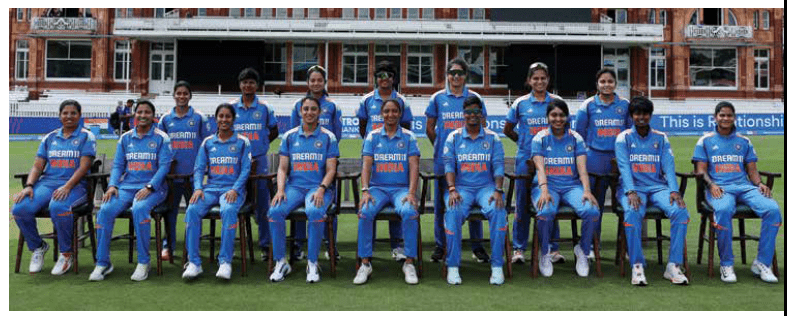
The team was India in miniature, 11 women, 11 dialects, 11 kinds of hunger.
- Harmanpreet Kaur (Punjab): Sold milk door-to-door so she could catch the 5 a.m. train to practice.
- Shafali Verma (Haryana): Swung a bat heavier than her schoolbag on a strip of concrete while trucks thundered past.
- Smriti Mandhana (Maharashtra): Practised cover drives in a Sangli lane, dreaming of Sachin on a black-and-white TV.
- Jemimah Rodrigues (Mumbai): Sang hymns in church, then faced 140 km/h in the nets, same lungs, same fire.
- Deepti Sharma (Uttar Pradesh): Travelled 200 km by bus for one session, her mother pawning gold bangles for spikes.
- Richa Ghosh (West Bengal): Left home at 13 with a suitcase and a promise: “I’ll make you proud, Ma.”
- Radha Yadav (Delhi): Fought floods, fought caste, fought for a place where her left-arm spin could speak louder than slurs.
- Renuka Singh (Himachal): Carried water uphill before carrying drinks for the team, now she carries India’s new-ball dreams.
They shared samosas on overnight trains, argued over Bollywood songs, and stitched each other’s dreams into one tricolour flag. When BCCI announced equal pay in 2023, ₹50 lakh, ₹30 lakh, ₹10 lakh contracts matching the men’s, Harmanpreet wept in a press conference. “We stopped asking permission to want the same sky,” she said.
This victory wasn’t luck. It was love made visible. The final became the most-watched women’s match ever, 7 billion minutes of strangers holding their breath for girls they’d never met. In a country ranked 131st on the Global Gender Gap, a billion hearts learned a new prayer: Let her play.
The work isn’t done. Domestic leagues need floodlights, not promises. Pay parity must survive boardroom politics. But when Harmanpreet lifted that trophy, she didn’t just hold silver, she held every girl watching from a rooftop in Rohtak, a balcony in Siliguri, a lane in Moga.
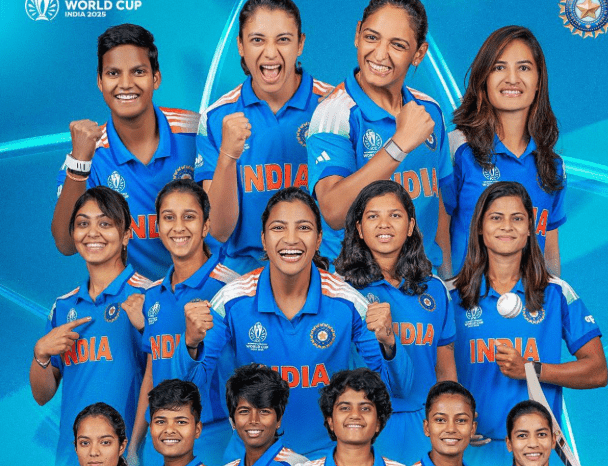
She held tomorrow.
Men’s cricket has been honoured for decades. Now, women’s cricket is remembered, not as a footnote, but as the story itself. One run, one wicket, one tear-streaked smile at a time.