


S N Poojitha

The Western Ghats are often described as the green backbone of peninsular India. They bring rain, feed rivers, support forests and shelter hundreds of rare species. But they are also home to farms, plantations, villages, towns, roads, industries and millions of people. Finding a balance between protecting this fragile landscape and allowing people to live and develop in it has been one of India’s most difficult environmental policy questions.
This debate has now returned to the centre of attention, particularly in Kerala and Karnataka.
The immediate trigger is the Union Ministry of Environment, Forest and Climate Change’s seventh draft notification issued in July 2026. It proposes to declare about 56,825.7 sq km across Gujarat, Maharashtra, Goa, Karnataka, Kerala and Tamil Nadu as an Ecologically Sensitive Area. In Karnataka, the proposed area is about 20,668 sq km covering 1,449 villages across 10 districts.
In 2010, the Government of India constituted the Western Ghats Ecology Expert Panel, headed by ecologist Madhav Gadgil. The panel took a broad approach and recommended that the Western Ghats as a whole should receive an ecological protection framework, with different levels of restrictions depending on ecological sensitivity. The recommendations generated considerable concern among governments, farmers, plantation owners and other stakeholders. There were apprehensions that extensive restrictions could affect agriculture, construction, mining, infrastructure and economic activity.
The Government subsequently constituted a High Level Working Group under Dr K. Kasturirangan in 2012 to examine the issue afresh.
The Kasturirangan Committee adopted a substantially different approach. It divided the Western Ghats landscape into what it called natural landscape and cultural landscape. The cultural landscape consisted largely of areas already influenced by human activity, including settlements, agriculture and plantations. The Committee identified approximately 59,940 sq km, or around 37 per cent of the Western Ghats region considered by it, as Ecologically Sensitive Area.
In simple terms, the idea was not to place the entire Western Ghats under the same regulatory regime. The emphasis was on protecting relatively intact natural landscapes while allowing greater space for human activity in areas that were already substantially modified.
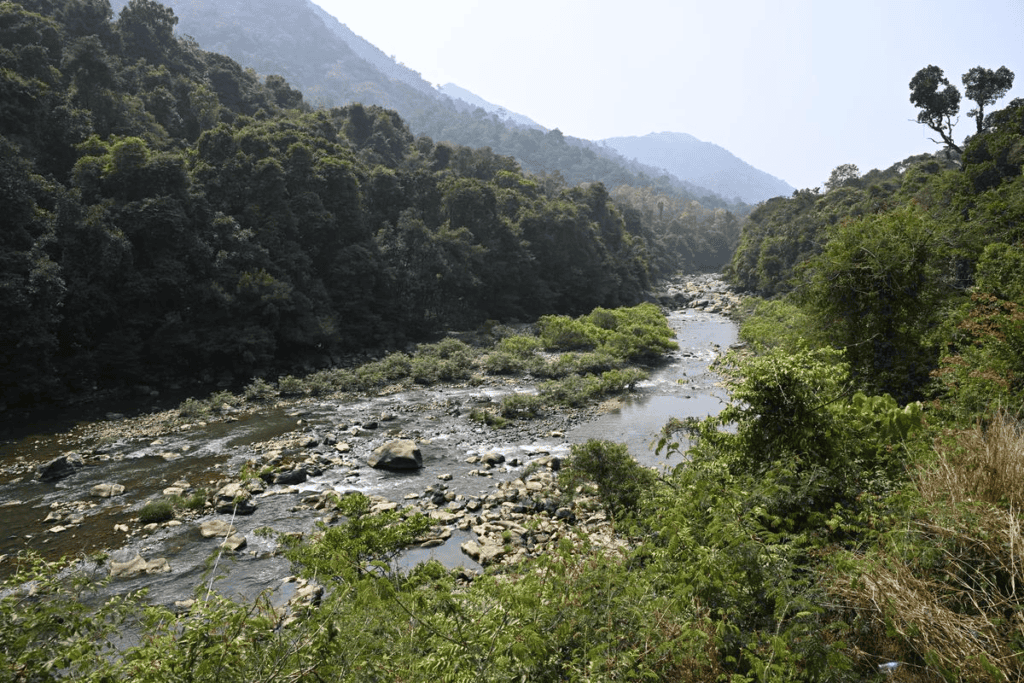
The most important point is that the Kasturirangan report does not propose banning agriculture or removing people from the Western Ghats. The restrictions are principally aimed at activities considered to have a high ecological impact. The proposed ESA framework provides for a complete ban on mining, quarrying and sand mining in the identified area. Existing mining activities were proposed to be phased out within five years or by the expiry of the mining lease, whichever was earlier.
It also proposes that thermal power projects should not be permitted. Hydropower projects could be considered, but subject to conditions relating to ecological flows, environmental assessment, minimum distance between projects and limits on the portion of a river basin that can be affected.
The report also proposes a ban on Red-category industries, while lower-impact industries could operate subject to environmental safeguards. Large construction projects of 20,000 square metres and above, as well as townships and area-development projects, would not be permitted in the ESA. Other projects requiring environmental clearance would be subjected to closer scrutiny, including assessment of cumulative impacts.
This distinction is important because much of the public debate has sometimes presented the proposal as a blanket restriction on all construction and agriculture. The actual framework is more specific. The draft notification also states that the ESA declaration would not affect ownership of property. It further provides for compliance with the Forest Rights Act and makes Gram Sabha consent mandatory for projects and activities covered by the relevant provisions.
The Kasturirangan report is more than 13 years old. The reason for it to gain focus is in the long journey from a committee report to a legally enforceable notification. The Centre has issued several draft notifications since 2014, but the final notification has repeatedly been delayed because of disagreements with the six states.
The latest draft issued in July 2026 followed the expiry of the previous draft and proposes the same broad area of around 56,826 sq km. The Centre has also indicated that the finalisation could potentially happen in a phased, state-wise manner rather than waiting for agreement across all six states. There is also increasing judicial and environmental pressure for action.
The National Green Tribunal has taken up Western Ghats-related environmental concerns, including issues concerning landslides, construction on vulnerable slopes and the long delay in notifying the ESA. In a 2024 suo motu proceeding concerning the Nilgiris and Coimbatore areas, the Tribunal specifically noted the importance of the Western Ghats and asked authorities about the status of ESA notification and activities such as mining.
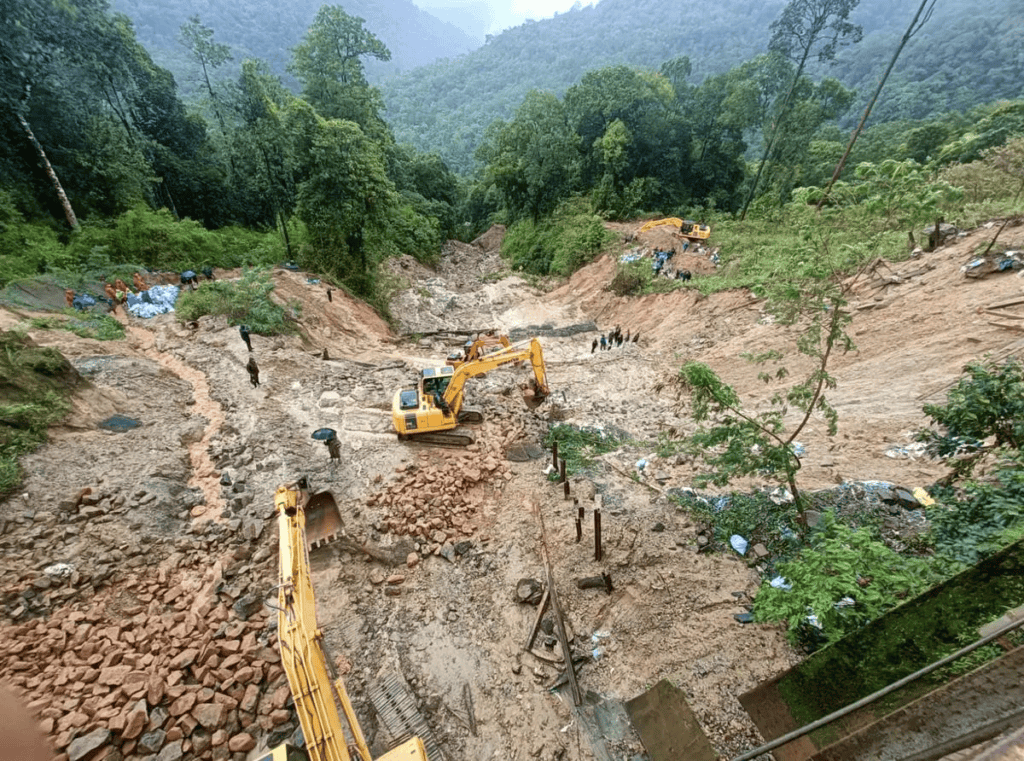
The issue has acquired additional urgency following major landslides in parts of the Western Ghats, particularly the Wayanad disaster of 2024. The NGT subsequently urged the Environment Ministry to move towards final notifications, particularly in areas requiring urgent ecological protection.
Thus, the present controversy is not simply about an old committee report. It is about whether and how the Centre should finally give legal effect to a conservation framework that has remained unresolved for more than a decade.
The objections are not uniform, and different states have raised different concerns.
One major issue is land-use mapping. The Western Ghats are not empty forests. A satellite image may identify an area as vegetation, but on the ground it may contain a coffee plantation, arecanut farm, homestead, road, village or other privately held land.
Karnataka has argued that satellite-based identification does not always adequately distinguish natural forests from agricultural land and settlements. The Karnataka government has therefore sought a fresh plot-level physical survey, including the use of modern mapping technologies, before the boundaries are finalised. In September 2026, the Karnataka Legislature unanimously passed a resolution opposing the current draft and seeking time for such a survey.
A second concern is livelihood. Coffee, arecanut, pepper, cardamom and other plantation crops are deeply connected with the economy of many Western Ghats districts. Farmers fear that an ESA designation could make future construction, expansion, roads, tourism facilities or other economic activity more difficult.
The draft, however, does not prohibit ordinary agriculture or plantation activity. The concern is more indirect: restrictions on infrastructure, processing industries, expansion and land-use changes can affect the economic environment in which agriculture operates.
A third issue is infrastructure. Western Ghats districts still require roads, bridges, hospitals, schools, electricity infrastructure, water supply systems and other public facilities. The question is how such projects should be treated when they fall inside an ESA.
The proposed framework does not impose a blanket ban on all infrastructure. But projects falling under environmental-clearance categories can face additional scrutiny and cumulative-impact assessment. This could make projects more time-consuming and technically demanding.
For mining and quarrying, the implications are considerably clearer. Mining, quarrying and sand mining are proposed to be prohibited inside the ESA. This has obvious implications for areas where stone quarrying and mining contribute to construction activity and local employment.
At the same time, environmental groups argue that precisely these activities demonstrate why a stronger ESA regime is necessary. They point to habitat fragmentation, pollution, slope instability and the cumulative impact of multiple projects. This creates one of the central disagreements in the debate.
The question is not simply whether development should happen. It is where development should happen, what kind of development is compatible with ecological limits, and who should make that determination.
The proposed ESA regime is being pursued under the Environment (Protection) Act, 1986, particularly the Central Government’s power to impose environmental restrictions under Section 5 read with the Environment (Protection) Rules. The draft notification itself invokes this statutory framework. A final notification would therefore have regulatory consequences even though it would not transfer ownership of private land to the government.
Perhaps the most difficult part of the Kasturirangan debate is that both sides have a legitimate concern. The Western Ghats cannot be treated like an ordinary landscape. It is a biodiversity hotspot, influences the monsoon and supports major river systems. UNESCO recognises its exceptional ecological importance, including its high levels of endemic biodiversity.
But the Western Ghats are also a lived landscape. Millions of people live there. Farmers cultivate land that may have been in their families for generations. Towns have grown around roads and markets. Plantation economies support large numbers of workers. Public agencies need to build schools, hospitals and roads. This may ultimately be the missing part of the debate.
The final shape of the Western Ghats policy will therefore depend on three things: scientifically accurate demarcation, legally sound regulation and meaningful accommodation of local livelihoods.
The Kasturirangan report was an attempt to move away from the idea that conservation and development must always be opposites. More than a decade later, the real test is whether that balance can be converted into a workable legal framework on the ground.
The Western Ghats will continue to need protection. The people who live in the Western Ghats will continue to need development. The challenge before policymakers is to ensure that protecting one does not mean abandoning the other.