


“Art doesn’t just illuminate humankind; it liberates it.” ~ Sonali Chakraborty, Co-founder, Art Illuminates Mankind
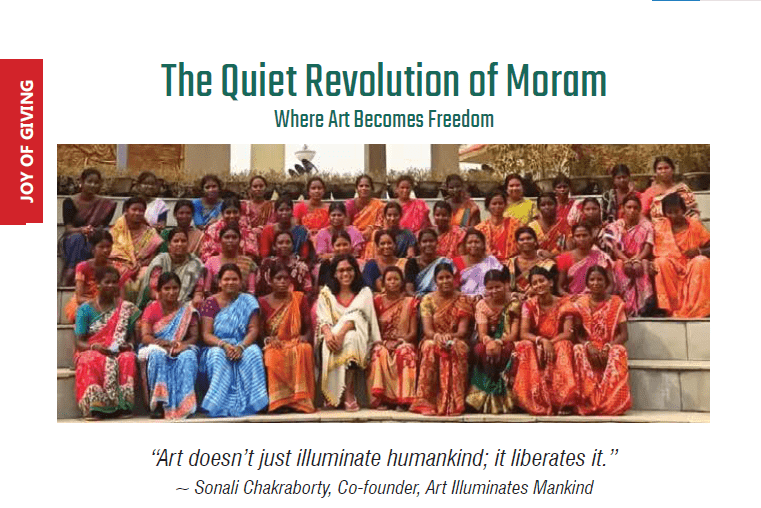
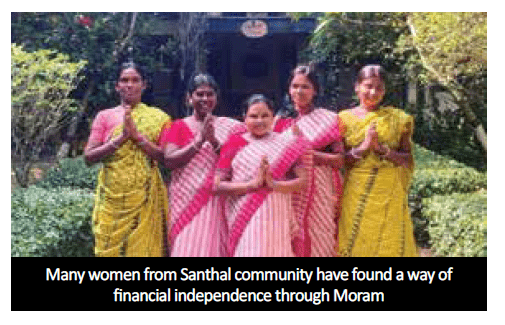
In the gentle red-soil expanse of Birbhum, not far from the poetic legacy of Santiniketan, a once-barren stretch of land has quietly transformed into something extraordinary. Here stands Moram, a living forest, a sustainable homestay, and most importantly, a beacon of hope for over 2,500 tribal women from Santhal and other marginalised communities. What began as a bold dream in 2012 has grown into a movement where creativity, community, and courage intertwine to rewrite lives.
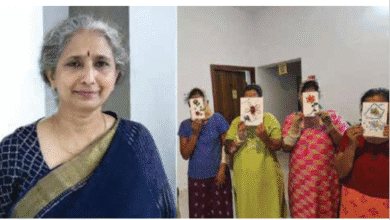
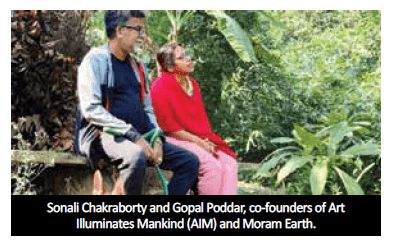
The story starts with two determined souls: Sonali Chakraborty and Gopal Poddar. Inspired by models of responsible tourism they had witnessed across India, the couple sold their Kolkata home and moved to a remote village 12 kilometres from Santiniketan. Under the banner of their NGO, Art Illuminates Mankind (AIM), they set out not merely to preserve dying folk arts, but to place the power of those arts directly into the hands of the women who had inherited them, women who, until then, were seen only as daily wage labourers.
The early days were far from easy. There was no electricity, no proper roads, and perhaps most challenging of all, little initial trust from the local communities. “The women were hesitant,” Sonali recalls. “Some wouldn’t even let us step into their courtyards. We visited villages day after day, demonstrating techniques door-to-door, showing them how their skills could translate into real income and independence.”
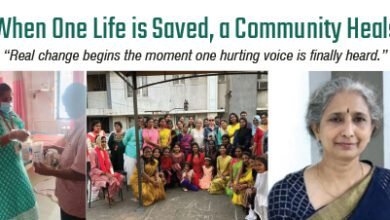
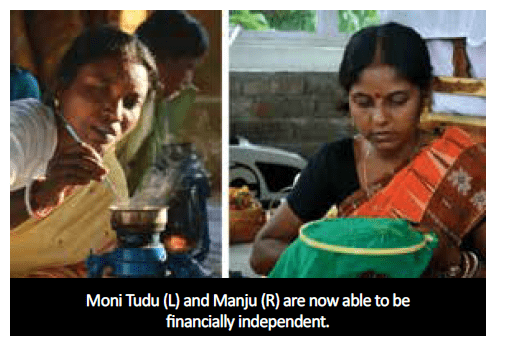
Here, tribal women engage in intricate Kantha embroidery and handloom weaving, turning tradition into livelihood. Slowly, trust took root. Small workshops on embroidery, batik, pottery, and natural dyeing began. Months turned into years, but the persistence paid off. Today, more than 2,500 women have received training through AIM and Moram, with around 100 artisans working consistently. Supported by government schemes from the Backward Class Welfare Corporation and SC/ST Finance Corporation, the initiative remains deeply community-led.
The women’s own voices tell the most powerful part of the story. Manju from Dorposhila village remembers how the training arrived just when her children were young: “It helped me educate them. Now I stand proud as a mother and as an independent woman.” Moni Tudu, who once led a small self-help group, shares, “We never imagined learning such crafts. Now we dream bigger, for ourselves and our children.”
In these workshops, creativity flourishes as women rediscover joy in their ancestral skills. For Putul Hansda, pottery became a path back to life after losing her husband. Khuku Moni describes Moram simply as her “oxygen” a place of renewal through ceramics, batik, and soap-making.
To bring these creations to the world, Sonali and Gopal launched Deshaj, a tribal-led fashion and lifestyle label. Showcasing Kantha, batik, natural dyes, and tribal weaves, Deshaj has walked the ramp at Lakme Fashion Week, blending heritage with contemporary design. Each piece carries not just beauty, but the story of resilience. Remarkably, 60–70 percent of every sale flows directly back to the artisans, ensuring dignity and fair earnings.
At the heart of it all is Moram itself: a sustainable homestay built with bamboo and care, surrounded by over 5,600 trees that now thrive where only cracked earth once lay. Guests arrive not as tourists, but as participants in slow living, sharing meals from organic farms, learning crafts, and leaving with a deeper connection to the land and its people.
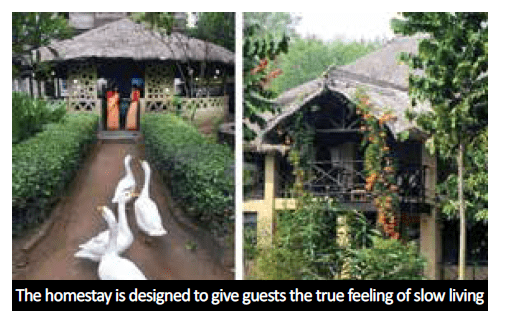
The sustainable cottages of Moram offer a peaceful retreat amid a regenerated forest. Adjacent stands the women-run Common Facility Centre, a hub for dyeing, tailoring, weaving, and packaging, complete with training spaces, hostels, and a canteen. It represents true self-sustainability: rural entrepreneurship owned and operated by the women themselves.
Moram is more than a project; it is a breathing ecosystem of healing and growth. With plans for a folk and tribal arts museum and a design school for the next generation, the vision stretches far into the future.
In the Joy of Giving section, Moram reminds us that the deepest joy often comes from lifting others. By choosing to stay, buy, or simply share their story, we become part of a quiet revolution one where art revives barren land, restores dignity, and empowers women to lead independent, fulfilled lives.
In these tranquil corners of rural Bengal, every thread stitched, every pot shaped, and every tree planted carries the same gentle message: when we give opportunity rooted in respect and creativity, entire communities rise and with them, hope for generations to come.