


“Real change begins the moment one hurting voice is finally heard.”
Ambika’s wedding in 2006 was expected to be the start of a hopeful new life. She had married the man she believed would be her anchor, someone with whom she could create a family grounded in trust and affection. For a brief moment, everything looked promising. But within six months, the façade crumbled. Her husband’s concealed addiction to alcohol began to surface, and with it came a kind of violence that reshaped the course of her existence. The outbursts were sudden, the assaults relentless. He forced himself on her daily, leaving her bruised not only on the outside but deep within, where wounds take far longer to heal.
When their two daughters were born, Ambika hoped fatherhood would soften him, or at least bring a sense of responsibility. Instead, he withdrew further. He refused to provide milk for the infants or pay basic rent. Ambika became both mother and breadwinner, waking before sunrise to work long hours at a book-binding factory, only to return each evening to a home laced with fear. Days blurred into an exhausting cycle of labour and violence, and with each passing year, her sense of self grew smaller under the weight of survival.
One ordinary evening, after she asked him again for money for groceries, he erupted into yet another fit of rage. The blows were cruel, delivered without pause or remorse. That night, Ambika cried herself into an exhausted sleep, wishing for even a moment of peace. But the next morning brought more brutality, and something inside her broke. She reached a point no one should reach, a place where escape felt impossible. In that moment of despair, she poured kerosene over herself and set her body aflame.
Her screams echoed through the neighbourhood. People rushed in, smothering the fire and carrying her to the hospital. She survived, but the flames left their mark: 34 percent burn injuries across the right side of her body. Despite the severity of what she endured, society offered her no real refuge. Neighbours advised her to stay quiet. Some insisted she should avoid filing a complaint. Others said she ought to “adjust,” hold her marriage together, and think of her children, as though her suffering was an inevitable part of womanhood.
“Sometimes, the smallest act of listening can save an entire life.”
But Ambika’s story took a different turn because someone decided to listen.
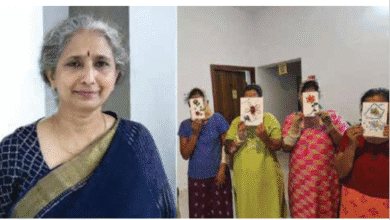
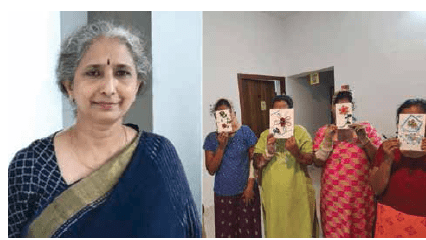
Her turning point came through the quiet yet powerful work of Prasanna Gettu, founder of the International Foundation for Crime Prevention and Victim Care (PCVC). Prasanna’s commitment began years earlier during her studies in victimology in Japan. There, she saw women walk confidently into counselling centres, unafraid to seek help. It sparked a question she couldn’t ignore: Why didn’t women in India have the same safe avenues?
Driven by that question, she returned to Chennai and founded PCVC in 2001. The organization built one-stop centres equipped to offer survivors medical assistance, legal support, therapy, and temporary shelter. A 24/7 helpline ensured that help was available at any moment of crisis. And it was this network that found Ambika in her hospital bed, isolated, injured, and surrounded by the pressure to stay silent.
Under PCVC’s care, Ambika began a long and difficult journey toward healing. Surgeries treated her burns. Counselling helped her confront the emotional trauma she had carried for years. Slowly, she pieced herself back together, rediscovering a sense of worth she had nearly lost. Today, she works as a welfare officer in the very organization that saved her, guiding other women who stand where she once stood. She raises her two daughters on her own, not with fear, but with purpose.
Her transformation is not just personal; it reflects the silent epidemic of domestic violence in India. One in three ever-married women experiences physical, sexual, or emotional abuse, yet only 14 percent ever seek help. Most continue to suffer behind closed doors, trapped by societal expectations that glorify endurance over safety.
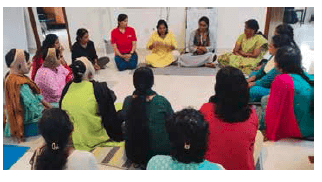
Prasanna believes that true change must begin early, at home, where the first lessons of respect or violence are learned. Children who grow up seeing their fathers hit their mothers internalize that behaviour. Violence becomes a language they speak into adulthood unless someone teaches them differently. Families must model healthier ways of resolving conflict and raise sons and daughters with equal dignity.
Schools, too, hold a crucial role. By teaching young people what healthy relationships look like—relationships built on communication, boundaries, and empathy—we can prevent the cycle from repeating. Education is not just about books; it’s about shaping mindsets.
Beyond immediate rescue, Prasanna emphasizes the importance of meaningful rehabilitation. Many survivors are pushed into low-income, low-growth work simply because it’s available. But healing should involve discovering one’s abilities, completing an education, learning a trade, or building a career that allows a woman to stand tall. Empowerment is not charity; it is opportunity.
“Empower a woman, and she empowers generations to come.”
This work requires more than the efforts of one organization. Police must be trained to recognize domestic violence as a serious, urgent crime. Support systems must respond with compassion rather than skepticism. Communities cannot remain passive observers. Neighbours who hear screams should not dismiss them as “private matters.” Awareness programs can transform silent bystanders into active allies.
Ambika’s story is proof of what becomes possible when even one person decides to intervene, listen, and stay committed. Through the determination of people like Prasanna Gettu, survivors move from fear to resilience, from isolation to community, from despair to dignity.
And in the process, something remarkable happens: when one woman’s life is saved, hope spreads. Healing ripples outward. The joy of giving becomes the joy of rebuilding a world where safety is not a privilege, but a right.