




Special Intensive Revision (SIR) and the Role of States
Adv. Mobin Sayed
mobin@singhania.com
The Special Intensive Revision (SIR) of electoral rolls represents one of the most significant exercises undertaken by the Election Commission of India (ECI) to ensure purity, transparency, and accuracy in democratic participation. The process gained national attention following judicial intervention by the Supreme Court of India, particularly in relation to implementation challenges faced by certain States, including West Bengal and concerns raised across other States such as Maharashtra.
The Supreme Court’s directions have transformed SIR from a purely administrative exercise into a constitutionally supervised electoral reform mechanism.
Concept and Objective of SIR
The SIR process involves:
- Verification of voter identity,
- Removal of duplicate or ineligible entries,
- Inclusion of eligible citizens,
- Adjudication of claims and objections relating to electoral rolls.
The exercise flows from constitutional obligations under Articles 324 and 326 of the Constitution of India, ensuring free and fair elections based on accurate voter lists.
Judicial Intervention by the Supreme Court
The Supreme Court intervened after large-scale disputes arose regarding the handling of voter claims and objections during SIR, especially in West Bengal, where millions of entries were placed under the category of “logical discrepancies.”
A Constitution Bench emphasized that no impediment should obstruct the conduct of SIR, recognizing electoral roll accuracy as fundamental to democratic governance.
Key Supreme Court Directions
The Court issued several important directions:
- Deployment of Judicial Officers
- Serving and retired district judges were directed to assist the Election Commission in deciding pending claims and objections.
- Supervision through High Courts
- The Calcutta High Court was empowered to deploy civil judges for adjudication of nearly 80 lakh voter claims arising from SIR.
- Inter-State Judicial Assistance
- Judges from neighboring States such as Jharkhand and Odisha were permitted to assist in clearing massive verification backlogs involving approximately 50 lakh documents.
- Transparency Measures
- The Election Commission was directed to publish lists of voters falling under discrepancy categories to maintain fairness and public confidence.
These directions demonstrate an unprecedented level of judicial oversight in electoral administration.
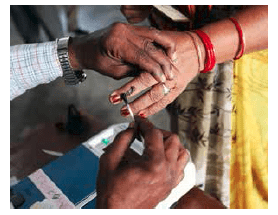
Position of West Bengal
West Bengal emerged as the focal point of litigation due to:
- Enormous volume of disputed voter entries,
- Allegations of exclusion and wrongful inclusion,
- Administrative delays in verification.
The Supreme Court noted the existence of a trust deficit between the State administration and electoral authorities, thereby justifying judicial monitoring of the SIR process.
Judicial deployment was considered necessary to ensure:
- Neutral adjudication,
- Timely disposal of objections,
- Electoral integrity before upcoming elections.
Relevance to the State of Maharashtra
Although Maharashtra has not witnessed litigation of the same magnitude as West Bengal, the Supreme Court’s directions possess pan-India implications.
For Maharashtra, the judgment establishes:
1. Binding Constitutional Principle
All States must cooperate fully with SIR exercises conducted by the Election Commission under Article 324.
2. Judicial Oversight as a Precedent
If administrative bottlenecks arise in Maharashtra, courts may similarly authorize:
- deputation of judicial officers,
- High Court supervision,
- expedited adjudication mechanisms.
3. Strengthening Electoral Governance
The ruling reinforces that State governments cannot delay or obstruct electoral roll verification where democratic legitimacy is involved.
Federal Balance and Constitutional Significance
The SIR directions highlight an evolving constitutional balance:
| Institution | Role |
| Election Commission | Conduct of revision |
| State Governments | Administrative cooperation |
| High Courts | Supervisory judicial assistance |
| Supreme Court | Constitutional guardian |
The Court’s approach reflects cooperative federalism, ensuring that electoral reforms remain insulated from political conflict.
Critical Analysis
The Supreme Court’s intervention raises important jurisprudential questions:
- Whether judicial involvement in electoral administration expands constitutional accountability.
- The extent to which courts may supervise executive electoral functions.
- Balancing administrative autonomy with democratic safeguards.
While critics argue that extensive judicial participation may blur institutional boundaries, proponents view it as essential where electoral credibility is threatened.
Conclusion
The Supreme Court’s directions concerning SIR mark a significant development in Indian constitutional law. The experience of West Bengal demonstrates how judicial intervention can restore procedural confidence in electoral revision, while States such as Maharashtra remain bound by the broader constitutional principles emerging from these rulings.
Ultimately, the SIR framework—strengthened by judicial supervision—aims to secure the foundational democratic promise that every eligible citizen votes, and no illegitimate entry survives in the electoral roll.