


Prior Approval under Section 17A of the Prevention of Corruption Act, 1988: Scope, Limits and Practical Pathways


“The shield meant to protect the honest must never be allowed to become a sword in the hands of the corrupt.”
~ Hon’ble Patna High Court in Rajendra Prasad v. State of Bihar (2022)
In the fight against corruption, few provisions have generated as much debate among investigators, prosecutors, and the judiciary as Section 17A of the Prevention of Corruption Act, 1988. Introduced in 2018 with the laudable object of safeguarding honest public servants from vexatious enquiries, it has, in practice, often been invoked as a protective fortress by those facing serious charges of graft and misappropriation. Understanding where the shield genuinely applies, and where it does not, is therefore critical for every investigating agency and vigilance wing.
Section 17A of the PC Act
17A. – Enquiry or investigation of offence relatable to recommendations made or decision taken by public servant in discharge of official functions or duties
(1) No police officer shall conduct any enquiry, inquiry, or investigation into any offence alleged to have been committed by a public servant under this Act, where the alleged offence is relatable to any recommendation made or decision taken by such public servant in discharge of his official functions or duties, without the previous approval—
(a) in the case of a person who is or was employed, at the time when the offence was alleged to have been committed, in connection with the affairs of the Union, of that Government;
(b) in the case of a person who is or was employed, at the time when the offence was alleged to have been committed, in connection with the affairs of a State, of that Government;
(c) in the case of any other person, of the authority competent to remove him from his office, at the time when the offence was alleged to have been committed.
Provided that no such approval shall be necessary for cases involving the arrest of a person on the spot on the charge of accepting or attempting to accept any undue advantage for himself or for any other person:
Provided further that the concerned authority shall convey its decision under this section within a period of three months, which may, for reasons to be recorded in writing by such authority, be extended by a further period of one month.
Simplified Explanation
In simpler words, Section 17A of the Prevention of Corruption Act restricts the police from conducting any enquiry or investigation against a public servant for decisions or recommendations made in the course of official duties without prior approval from the appropriate authority—Central Government, State Government, or the competent removal authority, depending on the officer’s position.
Approval is not required in trap cases where the public servant is caught accepting or attempting to accept a bribe. The authority must respond within three months, extendable by one additional month with written reasons.
It is clear that such permission is strictly related to “recommendation made or decision taken by such public servant in discharge of his official functions or duties.”
Penal Sections of the PC Act and Applicability of Section 17A
| Sl. No. | Section | Offence | 17A Required? | Reason |
|---|---|---|---|---|
| 1 | Section 7 | Offence of Bribery | No | Bribery is never pursuant to discharge of official duty |
| 2 | Section 13(1)(b) | Disproportionate Assets | No | Possession of unexplained wealth is never official work |
| 3 | Section 13(1)(a) | Criminal Misappropriation | Yes | Can occur while discharging official duty |
| 4 | Old Section 13(1)(d) | Criminal Misconduct (now deleted) | – | – |
Alternative Remedies
A. Cases of misappropriation can be registered under Section 316 BNS (criminal breach of trust) — no prior permission required.
B. Any offence outside the PC Act does not attract Section 17A.
C. Even under the PC Act, absolute protection is not granted. Three landmark judgments have now settled the law beyond doubt.
Landmark Judicial Pronouncements
1. Rajendra Prasad v. State of Bihar
(Patna High Court, CWJC No. 240 of 2022, decided on 24.05.2022 by Hon’ble Mr. Justice Ashutosh Kumar)
Held that disproportionate assets and possession of unexplained wealth can never be acts done in discharge of official duty; hence, Section 17A is wholly inapplicable.
2. Nara Chandrababu Naidu v. State of Andhra Pradesh
(Supreme Court, Special Leave to Appeal (Criminal) No. 12289 of 2023, decided on 16.01.2024 by Hon’ble Justices Aniruddha Bose and Bela M. Trivedi)
The Supreme Court delivered a split verdict but unanimously ruled that Section 17A is substantive in nature and applies prospectively only, i.e., not to offences committed before 26 July 2018, the date of its introduction.
The Court further clarified that where the allegation is of abuse of official position for personal illegal gain (including under the erstwhile Section 13(1)(d)), prior approval under Section 17A is not required if the inquiry commenced before the amendment, as such criminal misconduct is never part of official functions. The issue of retrospectivity has been referred to a larger Bench, but the prospective application protects ongoing probes from procedural hurdles.
3. CBI v. Santosh Karnani
(Supreme Court, Criminal Appeal No. 2148 of 2022, decided on 13.04.2023 by Hon’ble Justices M.R. Shah and C.T. Ravikumar)
In a case involving allegations of bribery and abuse of position in official dealings (including favouritism for extraneous considerations), the Court held that the first proviso to Section 17A exempts trap cases from prior approval.
The Court emphasized that the provision’s objective is to prevent frivolous probes, not to shield corrupt acts, and that prior approval is inapplicable where mens rea and personal benefit are evident from the outset, as such acts cease to qualify as “discharge of official duty.”
Key Operative Observations (CBI v. Santosh Karnani)
- “The requirement of prior approval would not be applicable in a trap case, as it would defeat the very purpose of the trap and the investigation, which clearly is not the intention of the provision.”
- “The overarching objective behind Section 17A of the PC Act is to provide a protective shield, preventing arbitrary or frivolous investigations against public servants… However, the requirement for prior approval has a plausible potential to impede or delay investigations, making it challenging for law enforcement agencies to pursue cases of corruption efficiently.”
Conclusion
Section 17A remains a delicate balance between institutional autonomy and accountability. When rightly interpreted—as the Patna High Court and the Supreme Court in Nara Chandrababu Naidu and CBI v. Santosh Karnani have done with exemplary clarity—it protects the bona fide decision-maker without becoming an impenetrable barrier against genuine anti-corruption action.
Investigating agencies must keep these judicially delineated boundaries in mind, choose appropriate statutory provisions, and ensure that the fight against corruption is neither frustrated by procedural technicalities nor compromised by misplaced deference.
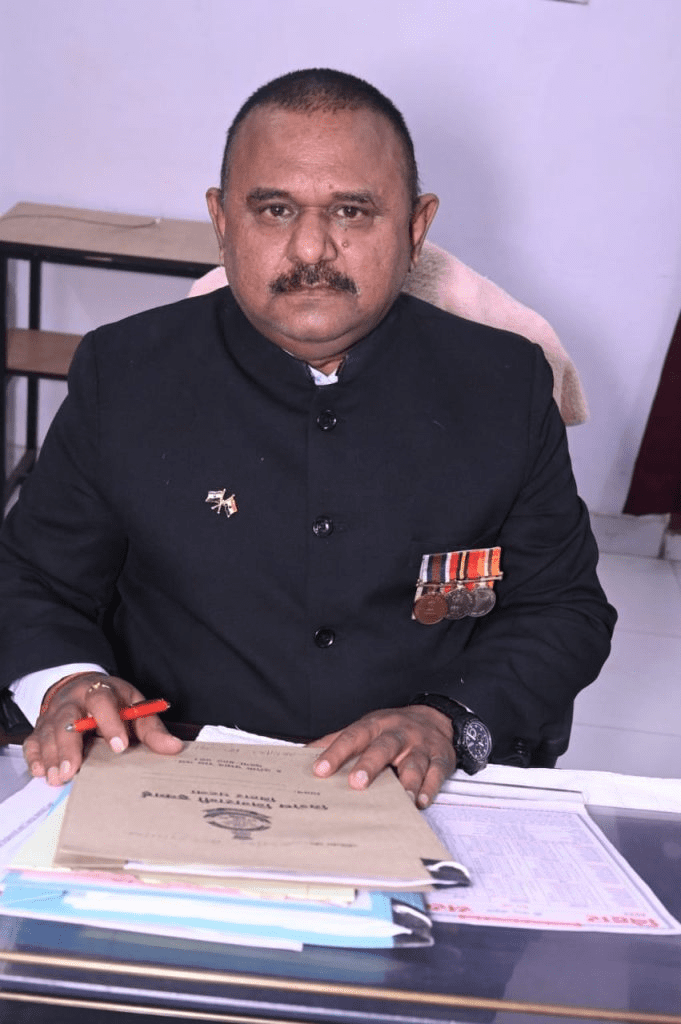
Dr. J. P. Mishra
Superintendent of Police
Special Vigilance Unit, Patna