


“Education is not the filling of a pail, but the lighting of a fire.”~ William Butler Yeats
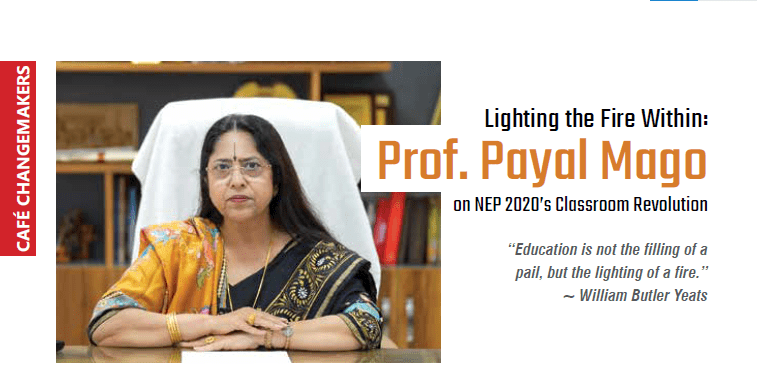
Imagine stepping into a classroom not as a passive listener cramming for exams, but as an explorer piecing together knowledge from biology, economics, literature, and environmental science, all while building real-world skills through internships and projects. This isn’t a futuristic dream. It’s the everyday reality unfolding in India’s higher education landscape, thanks to the National Education Policy (NEP) 2020. And few voices capture its promise as vividly as Prof. Payal Mago, Director of the Campus of Open Learning, University of Delhi.
Prof. Mago’s Inspiring Journey
Prof. Mago’s journey, from a bright Botany scholar at Miranda House to a distinguished academic leader, embodies the very spirit of holistic education she champions. With a Ph.D. from the University of Delhi, decades of teaching and research in mycorrhizae, bioremediation, phytoremediation, and sustainable agriculture, and authorship of several books on environmental issues and intellectual property rights, she has seamlessly blended scientific excellence with a deep commitment to inclusive learning. As Principal of Shaheed Rajguru College of Applied Sciences for Women and now steering open and distance education at DU, she brings both rigorous expertise and passionate advocacy to the implementation of NEP.
In a recent conversation, Prof. Mago painted NEP not as dry bureaucracy, but as a vibrant, student-centric revolution.
A Fresh Start: From Rigid Rote to Holistic Growth
For generations, Indian education followed a linear 10+2+3 model, rigid streams, high-stakes exams, and limited flexibility. NEP 2020 flips the script with its 5+3+3+4 curricular structure, aligning learning with the natural developmental stages of a child’s mind. “It replaces the traditional approach with a more viable and student-friendly one,” Prof. Mago explains warmly. “Students now learn deeper than merely attempting exams. The focus is on understanding, critical thinking, and applying knowledge.”
In higher education, the shift feels even more liberating. Universities like Delhi have led the charge through the Undergraduate Curriculum Framework (UGCF) under Vice-Chancellor Prof. Yogesh Singh’s visionary leadership. This framework inspires institutions nationwide by embedding multidisciplinary choices right from the start.
Picture a student passionate about computer science who also loves psychology and entrepreneurship. Under NEP, they can major in one while minoring in another, weaving in skill courses, value-added modules, environmental studies, research methodology, and even Indian Knowledge Systems. “Multidisciplinary education opens doors for students to choose subjects freely,” Prof. Mago notes with enthusiasm. It nurtures critical thinkers, problem-solvers, and innovators, exactly the profile employers seek in a rapidly evolving world. Practical exposure arrives early: projects, internships, and fieldwork replace theoretical silos. Students gain hands-on experience, making them job-ready from their initial years rather than waiting until graduation.
The Magic of Flexibility: Credits That Travel with You
One of NEP’s most empowering features is the Academic Bank of Credits (ABC), think of it as a “savings account” for learning. Every credit earned counts, whether from a regular college, online course, or even a semester abroad.
- One year (44 credits) → Undergraduate Certificate
- Two years (88 credits) → Undergraduate Diploma
- Three years (132 credits) → Bachelor’s Degree
- Four years (176 credits, with research/entrepreneurship project) → Bachelor’s Degree with Research/Honours
This multiple-entry-multiple-exit system offers unprecedented mobility. Drop out due to personal reasons? Re-enter later without losing progress. Switch disciplines or institutions? Your credits follow seamlessly. For working professionals or lifelong learners, distance and online modes through DU’s School of Open Learning make quality education accessible anytime. Prof. Mago, with her deep roots in open learning, sees this as a game-changer: “NEP benefits learners across age groups, allowing them to study as per their timeline and needs.”
Towards Viksit Bharat @2047: Skilling India, Rooted in Values
NEP isn’t just about individual success, it’s the bedrock of Viksit Bharat (Developed India) by 2047. Prof. Mago describes it as “the core” for building a skilled, smart youth force that drives a super economy. Deeply rooted in Indian culture, history, and knowledge systems, it simultaneously embraces modern critical thinking, moral values, and technological advancement. The policy aligns education with Sustainable Development Goals (SDGs), fostering public-private partnerships, innovation, and an adaptable system that cares for both people and the planet. “It makes India a model where education nurtures citizens who contribute to society while being free from the blindness of ignorance,” she adds.
A key metric? Gross Enrolment Ratio (GER) in higher education (age 18-23). It stood at around 28.4% in 2021-22 and NEP targets 50% by 2035. Flexible credits, multiple exits, online/distance options, and inclusive outreach will help achieve this ambitious leap.
Lighting the Fire: A Call to Action
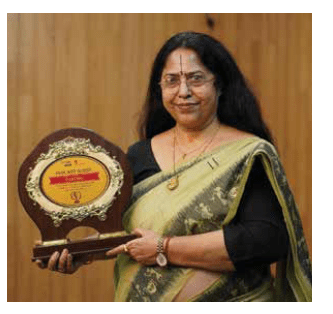
As an educator who has mentored research scholars on sustainable agriculture and environmental issues, and shaped policy at the highest levels, Prof. Payal Mago lives the NEP vision daily. Her own career, marked by awards, research projects, and social initiatives on gender sensitization and environmental awareness, mirrors the policy’s emphasis on values alongside skills. For students, NEP means freedom to dream bigger: blend disciplines, pause and restart learning, gain practical expertise, and emerge not just employable but truly empowered. For India, it signals a move toward becoming Vishwa Guru once again, a global leader in education that balances ancient wisdom with 21st-century innovation.
The transformation has begun at places like the University of Delhi. Now, it’s up to institutions, educators, and learners to keep the fire burning. In the bustling cafes of Delhi University or the virtual classrooms of open learning, a new generation is awakening. The pail is set aside; the fire is lit. And India’s educational renaissance is just getting started.
Prof. Payal Mago: Igniting Minds for a Viksit Bharat
This guest article draws inspiration from an insightful conversation with Prof. Payal Mago, Director, Campus of Open Learning (and School of Open Learning), University of Delhi. A distinguished botanist, environmental scientist, and visionary academic administrator, Prof. Mago brings decades of rich experience in teaching, groundbreaking research, and policy implementation to the forefront of India’s higher education reforms. Her passionate advocacy and deep understanding make her one of the most compelling voices guiding the successful rollout of NEP 2020.