



“One small, steady step can light up lives and change communities forever.” Ms. Delina Khongdup
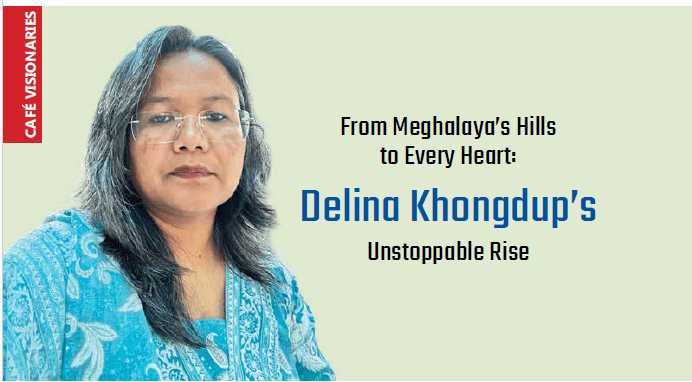
In the hills of Meghalaya, where tradition and resilience walk hand in hand, Ms. Delina Khongdup’s journey stands as a quiet yet powerful testament to what one determined individual can achieve. From a remote village with limited opportunities to serving as a Member of the National Commission for Women, she has bridged worlds, customary laws and constitutional rights, cultural preservation and gender empowerment, grassroots struggles and national advocacy. In this candid conversation, Ms.Delina opens up about the challenges, the heartaches, the small victories, and the unbreakable hope that has carried her forward.
Exclusive Interview with Ms. Delina Khongdup
Question: What was it really like growing up in Lyndem village, and what gave you the courage to leave for studies so far away in Nashik?
Delina Khongdup: Life in Lyndem was simple and close to nature, hills, community, and everyone knowing everyone. But, that time, in the 90s education beyond primary level was almost impossible there. My family made a huge sacrifice to send me to Nashik for higher studies at Vidya Prabodhini Prashala and Bhonsala Military College. It was frightening being so far from home, in a completely different culture and language, but I kept thinking about the children of the same age back home, who had no options. That thought pushed me through the homesickness and challenges. Also I am self assured that I have big family who shield me from whatever circumstances, however big it was, my local guardian in Nashik and my parent’s blessing was everything. The only task for me is to complete my study.
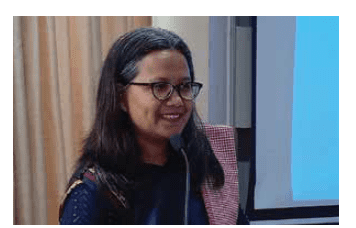
Question: You became Headmistress in your own village school, what were some of the toughest moments in making that school work?
Delina Khongdup: Taking over Jingkieng Ksiar U.P. School after it was upgraded felt like a dream come true, but it wasn’t easy. We had basic infrastructure issues, we used the small hut belonging to Anganwadi centre, limited teaching materials, and convincing parents to send their children, especially girls, was hard because many families needed them at home for work. There were days when attendance was low due to weather or farming seasons. But seeing a child light up when they understood something new made every struggle worth it. It taught me patience and persistence.
Question: Moving into law and practicing in Meghalaya’s courts, especially the KHADC ones, what personal hurdles did you face balancing customary laws with modern legal rights?
Delina Khongdup: I always told people that I am a lawyer by accident, my path is somewhere else. It was tough, especially when you are the first generation Lawyer with no godfather, forget about being the first generation lawyer, I am the first generation of my clan to be graduated and having degree in law. My parents, my father has never attended the formal school but not illiterate and my mother studies till class VI. Coming back after my law degree from Pune, I had to navigate two worlds: our traditional Khasi customs under the Sixth Schedule and constitutional protections. Sometimes there’s tension, people worry that talking about rights might dilute our identity. As a woman lawyer in a patriarchal setup at times, earning trust took effort. But I’ve always believed both can coexist, and handling cases where women felt unheard showed me how important it is to bridge that gap gently.
I was fortunate enough to have best friend, supportive partner who is ultimately my husband and the father of my children who push me throughout this difficult time, he stood by me, he lead me to every offices in Shillong and guided me as if he is a professional lawyer himself.
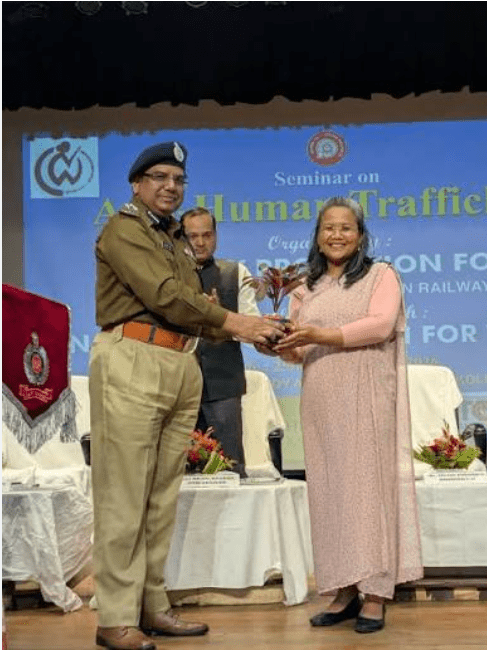
Question: Empowering women through skill training sounds rewarding, but what were the biggest obstacles you encountered along the way?
Delina Khongdup: Starting the training center in Pynursla with partners like Shubham Charitable Association and Jan Shikshan Sansthan was exciting, but funding was always tight, transportation for women was difficult, and some women were hesitant due to uncertainty. Many group, whether it is private or public training centre, has not been successfully fulfilled or run to the satisfaction of women who are ready to learn, always close their centre half way. The first and foremost challenge I faced was gaining the trust of those women in the area. During the pandemic, we pivoted to mask-making, which helped, but seeing women doubt their own abilities was heartbreaking. I had to keep encouraging them, reminding them their skills mattered. Many of them now run small tailor shop at home or getting order from the shop owner in the market, and meagerly earning but they are capable to stand in their own feet, that’s the victory that keeps me going.
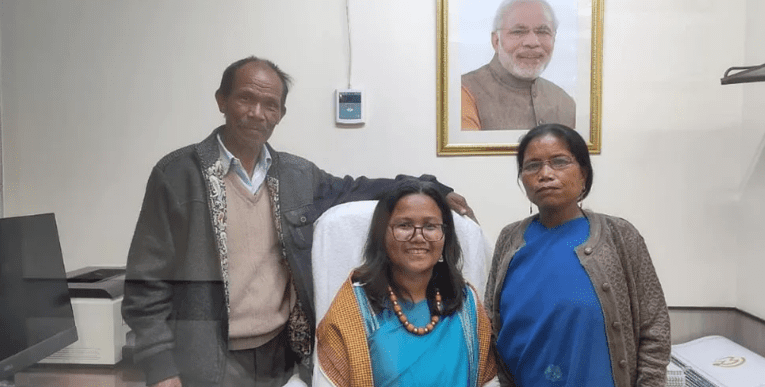
Question: Running a Self-Help Group and bringing digital services to the village, how challenging was it to get people, especially elders or women, comfortable with technology?
Delina Khongdup: Connectivity is poor in remote areas, and many had never used a smart phone or computer. Explaining things like Aadhaar updates or online applications in simple Khasi terms took time. There was resistance too, some thought it was unnecessary or feared mistakes. We have to go door to door and village to village for Eshram registration and other central scheme, it was fun and at the same time challenging. But once a few women successfully got certificates or applied for schemes without traveling to town, word spread. It built their confidence, and that’s what I cherish most.
Question: As a free legal adviser in rural areas, you’ve helped with tough personal issues. What’s been the hardest part emotionally for you?
Delina Khongdup: Hearing stories of marriage breakdowns, maintenance struggles, Single mother, and their challenges of not getting birth certificate for their child without father’s name or women feeling trapped because they don’t know their options, it takes a toll. But this makes me to continue looking and searching what the laws say on single parenting and the challenges they face as single mother. Some cases involve domestic issues where women are scared to speak up due to family pressure or stigma. I feel their pain deeply, but I remind myself that just listening and guiding them toward solutions gives them hope. It’s exhausting, but knowing I’ve helped someone stand up for themselves makes it meaningful.
Question: You’re deeply involved with Seng Khasi to preserve Khasi culture, how do you handle the challenge of advocating for women’s rights without it feeling like a threat to tradition?
Delina Khongdup: It’s delicate. Our customs and faith are our roots, and I never want anyone to feel they’re under attack. But when traditions hold women back, like in some inheritance or decision-making practices, change is needed. I face pushback sometimes, but I approach it with respect, showing how empowering women strengthens the community overall. It’s about harmony, not opposition.
Question: During your time as a Member of the National Commission for Women, what were some of the personal challenges you faced in that high-responsibility role?
Delina Khongdup: Traveling across states, handling sensitive cases like human trafficking or grievances, the challenges I experienced during enquiries of some heinous crimes such as rape and murder cases, one of them RG Kar Hospital case in Kolkata, Sandeshkhali, in Udaipur, Sikar, Shillong, Guwahati and many others and being away from family for long periods, it was demanding. The emotional load of meeting survivors and pushing for systemic changes was heavy. There were moments of frustration when progress felt slow, but the support from colleagues and seeing even small policy impacts kept me strong. It broadened my perspective hugely.
Question: Looking back, from your village beginnings to national-level work, what’s been the hardest challenge overall, and how did you keep going?
Delina Khongdup: The biggest challenge has been limited resources and the slow pace of change in rural areas, poverty, awareness gaps, cultural barriers. There were times I felt overwhelmed, wondering if my efforts were enough. But every time a woman thanks me for helping her get a certificate, or a child says they want to study further, or a community starts valuing girls’ education more, it renews my energy. I keep going because I’ve seen that one person’s persistence can spark real change. It starts small, but it grows.
Question: And finally, Delina, do you have any special message for our readers, people from different parts of the country who are reading your story today?
Delina Khongdup: Never doubt the quiet power of one small, steady step. Wherever life has placed you: village, town or city, start right there. Trust your strength, even on hard days. You’re not alone, find caring hearts, join hands, and move forward together. Real change blooms one gentle act at a time. Stay hopeful, stay kind, keep lifting others. Your story matters, write it with courage.
Echoes of Change: One Life, Many Lives
Delina Khongdup’s remarkable journey proves that real transformation does not need grand gestures or perfect conditions, it is born from quiet courage, unwavering persistence, and deep compassion. From the misty hills of Lyndem to the corridors of national policy, she has shown that one woman’s steady steps can illuminate paths for countless others.
Her story is a heartfelt reminder that each of us, no matter where we stand, holds the power to spark meaningful change. May her life inspire us all to take that first small step with hope and determination.