



S N Poojitha

Dhitya had barely opened her eyes when her smartwatch vibrated. Sleep score: 68. You slept poorly. Before she could even stretch, another notification appeared. Your heart rate is slightly elevated. While brushing her teeth, it reminded her that she had not met her step goal the previous day. By lunchtime, it urged her to stand up. In the evening, it warned that she had been sitting for too long. Before going to bed, it suggested that she meditate because her stress levels seemed high.
One day, Dhitya simply took off the watch and left it on her bedside table. Surprisingly, she felt lighter. For the first time in months, she went for a walk without worrying about calories, heart rate, or whether the walk would improve her “daily readiness score.”
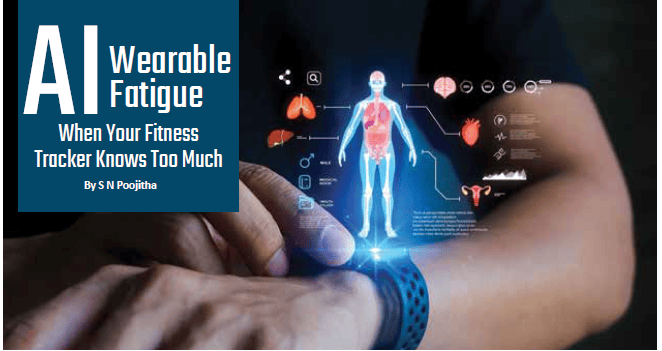
This is becoming a common experience. Wearable technology has made our lives healthier in many ways, but for some people it has also become a source of constant anxiety. Experts now call this growing problem AI wearable fatigue.
Fitness trackers, smartwatches, and health bands are remarkable devices. They count our steps, monitor our sleep, measure our heart rate, estimate calories burned, remind us to drink water, and even detect unusual health patterns. Powered by artificial intelligence, they study our daily habits and offer personalized suggestions to improve our well-being.
At first, these features seem exciting. Many people begin walking more because their watch encourages them. They start sleeping earlier to improve their sleep score. Some even lose weight or manage chronic conditions better. For millions of users, wearable devices have become trusted health companions.
The problem begins when the helpful assistant slowly turns into a demanding supervisor.
Imagine receiving dozens of notifications every day. Walk more. Stand up. Drink water. Breathe deeply. Sleep earlier. Exercise harder. Your recovery is low. Your stress is high. You missed your goal yesterday.
Each notification may seem harmless. But together, they can create a feeling that you are constantly being judged. Instead of enjoying life, people start chasing numbers.
Many users admit that they feel guilty if they fail to complete 10,000 steps. Some walk around their bedroom late at night just to close the activity ring on their smartwatch. Others become upset if their sleep score falls even though they feel perfectly refreshed.
Ironically, technology designed to reduce stress sometimes ends up creating more stress.
Psychologists have noticed another interesting phenomenon. People increasingly trust the device more than their own body.
Suppose someone wakes up feeling energetic after a good night’s sleep. But the smartwatch displays a poor sleep score of 62. Suddenly, they begin believing they are tired, even though their body says otherwise. The reverse also happens. A person may feel exhausted, but if the watch says their recovery score is excellent, they push themselves harder than they should.
This dependence on numbers can slowly weaken our ability to listen to our own body.
Artificial intelligence plays a major role in this process. Modern wearable devices do much more than collect data. They analyse patterns, predict future health risks, compare our behaviour with millions of other users, and recommend changes.
The advice often sounds scientific and precise. But AI is not perfect. Stress scores may rise because of excitement before a wedding, not because something is wrong. Heart rates can increase after climbing stairs or drinking coffee. Sleep quality may appear poor simply because you moved frequently during the night.
The algorithms are intelligent, but they cannot fully understand human emotions, life events, or personal circumstances.
Social media makes the problem even worse. Many people proudly share screenshots of perfect sleep scores, long runs, or impressive fitness streaks. Others begin comparing themselves with these achievements. Soon, health becomes another competition.
Instead of asking, “Do I feel healthy?” people ask, “Why is my score lower than everyone else’s?”
Ironically, the pursuit of perfect health starts affecting mental health. Researchers have also observed something called “data overload.”
Every day, wearable devices generate enormous amounts of information. Heart rate variability, oxygen levels, stress scores, sleep stages, calories, body temperature, readiness scores, and recovery metrics can overwhelm users.
Not everyone knows how to interpret these numbers correctly. Without proper understanding, minor variations can cause unnecessary worry. A small change in heart rate or oxygen level may trigger panic, even though it falls within the normal range.
Doctors often remind patients that wearable devices are useful tools, not medical experts. They provide valuable clues, but they cannot replace professional medical advice or common sense.
This does not mean wearable technology is bad.
In fact, these devices have helped detect heart rhythm disorders, encouraged people to exercise regularly, and motivated many individuals to adopt healthier lifestyles. They can remind older adults to stay active, help patients recover after surgery, and encourage better sleep habits.
The issue is not the technology itself. The issue is how we use it.
Just as eating healthy food becomes unhealthy if taken to extremes, health tracking also needs balance.
Many experts recommend turning off non-essential notifications. Instead of checking every statistic several times a day, users can review their data once every few days. Some people even take “device-free weekends” when they leave their fitness tracker at home and simply enjoy walking, cycling, or swimming without measuring every movement.
This allows exercise to become enjoyable again rather than another task on a checklist.
It is also important to remember that health cannot always be measured by numbers. A joyful evening with friends, a relaxing family picnic, or dancing at a wedding may not improve every fitness metric, but they contribute greatly to emotional well-being.
No smartwatch can accurately measure happiness, kindness, laughter, or peace of mind.
Technology should support our lives, not control them. Perhaps the best approach is to think of wearable devices as friendly advisers rather than strict judges.
Listen to their suggestions, but also trust your own body. If you feel energetic, enjoy the day. If you are tired, allow yourself to rest. If you miss your daily step goal once in a while, it is perfectly fine.
After all, the purpose of technology is to make life easier, not to make us anxious.
As for Dhitya, she still wears her smartwatch but differently now. Most notifications are switched off. She checks her health data occasionally instead of constantly. More importantly, she no longer lets a number decide whether she has had a good day.
Sometimes, the healthiest decision is not taking one more step—it is taking a break from the device that keeps counting them.