


“From Delhi lanes to Mauritian shores, she carries a language like a living letter delivered with warmth, memory and hope.”
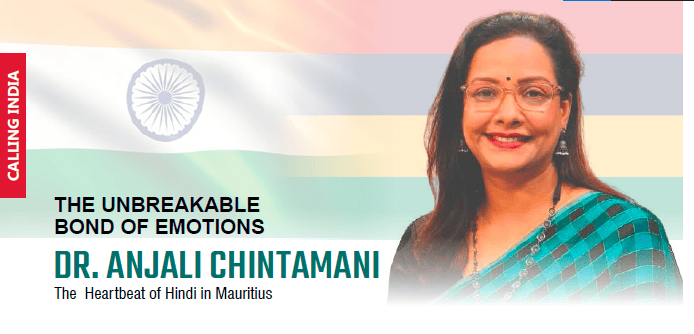
On a sunlit afternoon in Port Louis, the air hummed with the mixed scents of cardamom tea and the sea. In that gentle bustle, I first met Dr. Anjali Chintamani. Three encounters across different visits left a single, lasting impression. She is more than a teacher of language; she carries a warmth and dignity that make Hindi feel like home far from home.
Dr. Chintamani teaches Hindi at the Mahatma Gandhi Institute in Mauritius, where her influence stretches beyond the classroom. Students, colleagues and community members speak of her with an affectionate reverence. Her presence in public life, leading cultural programmes, guiding literary circles, and speaking at social events, has made her a familiar and trusted figure across generations.
Originally from Delhi, Anjali arrived in Mauritius to begin her professional journey and never ceased to weave bonds between the island’s Indian diaspora and their linguistic heritage. Her arrival was not just a change of address; it was the beginning of a mission to keep a living language thriving in a place where many languages meet.
There is an effortless grace to the way she conducts herself. Her professional polish, measured speech and deep knowledge of Hindi literature and pedagogy leave an impression on anyone who listens. She does not merely teach grammar and vocabulary; she nurtures an emotional connection to stories, poems and songs that carry memories of India into the lives of Mauritians.
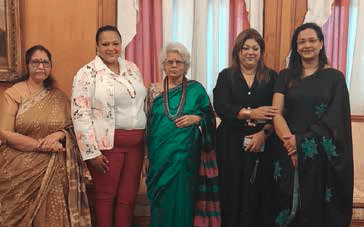
Listening to Anjali is like watching someone translate culture as much as words. She has a way of drawing out the poetry in everyday speech, of reminding students why a proverb matters, and of showing them how a verse can hold the scent of a grandmother’s kitchen or the cadence of a festival procession. It’s this blend of erudition and empathy that has won her admiration across the island.
Her role at the Mahatma Gandhi Institute places her at the crossroads of education and community service. She designs courses that are mindful of where students come from—children of migrant families, those reconnecting with ancestral languages, and learners who simply love Hindi for its literary riches. Outside the classroom, she is a familiar face at cultural events, often involved in organising recitals, literary evenings and workshops that bring Hindi’s best-loved forms to life.
What stands out most about Dr. Chintamani is how she bridges distance with intimacy. For many Mauritians of Indian origin, language is a thread to a homeland many have never seen. Anjali tends that thread with quiet dedication. Her storytelling sessions revive old customs, and her carefully selected poems become small anchors of identity. Younger generations, who might otherwise drift away from their linguistic roots, find in her a reason to linger.
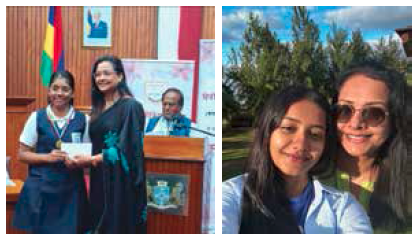
Her Delhi upbringing shows in the authenticity of her language and the breadth of her references, while her years in Mauritius honed her sensitivity to local nuance. The result is a teacher and cultural ambassador who can converse comfortably with scholars and students, elders and youngsters, diplomats and shopkeepers. Each encounter with her feels personal; she remembers names, small details of conversations, and the preferences of those who attend her classes.
On my final visit before returning to India, I watched an evening programme where Dr. Chintamani guided a performance of classic and contemporary Hindi poems. She watched the recital with a quiet pride, eyes reflecting the stage lights and a community’s gratitude. Afterward, people lingered around her to exchange memories, to ask for a recommendation, or simply to touch a thread of shared past. It was then I understood why she is so beloved: she brings the warmth of home to a corner of the world that built a new life while keeping the old close.
Exclusive Interview with Dr. Anjali Chintamani
Question: What drew you to teach Hindi in Mauritius and how do you make it feel relevant to younger generations?
Dr. Anjali Chintamani: I aim to preserve and share the Hindi that shaped me. In Mauritius, I help the community stay rooted while nurturing new Indian cultural expressions. To keep Hindi alive for youth, I mix classical texts with contemporary media—songs, films, social stories—and promote critical thinking and creative writing so students view Hindi as a living, usable language rather than a relic.
Question: What role does language play in the identity of the Indian diaspora here?
Dr. Anjali Chintamani: Language is a bridge. It carries traditions, values and memories. For many families, Hindi connects them to grandparents’ stories, festival rituals and cultural practices that anchor their sense of belonging.
Question: Can you recall a memorable moment from your time at the Mahatma Gandhi Institute?
Dr. Anjali Chintamani: Once, a student performed a poem in Hindi and explained how it reminded him of his grandmother’s lullabies. Seeing tears and laughter in that room, realising literature had brought personal history alive, was unforgettable.
Question: How do you stay connected to India, and what does India mean to you now?
Dr. Anjali Chintamani: India remains an emotional and intellectual anchor; its festivals, literature and family memories are always with me. I stay connected through visits, correspondence with friends and family, Indian media, and by bringing Indian festivals and literature into my work here. India represents both origin and inspiration; it’s the well I return to for stories, tastes and rhythms that shape my teaching.
Question: What message would you like to send to our readers in India and beyond?
Dr. Anjali Chintamani: Cherish your languages and stories. They travel in your voice and in the lives you touch. Even far from home, a poem or a song can keep memory and warmth alive. Support teachers, attend cultural events, and encourage young people to listen to their elders; these small acts preserve a larger belonging.
Woven Words: Preserving Home Through Speech and Song
Dr. Anjali Chintamani’s journey reminds us that language does more than name things; it carries memory, shapes belonging, and keeps home alive far from familiar streets. Through teaching, performances and engaging conversations, she has stitched a living thread between Delhi and Mauritius, helping new generations inherit not just words but the feelings those words hold.
As readers, we might ask ourselves: which voices are keeping our stories alive, and what small acts can we do to ensure those stories pass on?

Ph.D. Be.d .
Delhi